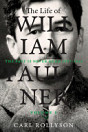
The Life of William Faulkner: This Alarming Paradox, 1935–1962
About this ebook
Thus begins roughly a decade of shuttling between his home and family in Mississippi—lifeblood of his art—and the backlots of the Golden Age film industry. Through Faulkner’s Hollywood years, Rollyson introduces such personalities as Humphrey Bogart and Faulkner’s long-time collaborator Howard Hawks, while telling the stories behind films such as The Big Sleep and To Have and Have Not. At the same time, he chronicles with great insight Faulkner's rapidly crumbling though somehow resilient marriage and his numerous extramarital affairs--including his deeply felt, if ultimately doomed, relationship with Meta Carpenter. (In his grief over their breakup, Faulkner—a dipsomaniac capable of ferocious alcoholic binges—received third-degree burns when he passed out on a hotel-room radiator.)
Where most biographers and critics dismiss Faulkner’s film work as at best a necessary evil, at worst a tragic waste of his peak creative years, Rollyson approaches this period as a valuable window on his artistry. He reveals a fascinating, previously unappreciated cross-pollination between Faulkner’s film and literary work, elements from his fiction appearing in his screenplays and his film collaborations influencing his later novels—fundamentally changing the character of late-career works such as the Snopes trilogy.
Rollyson takes the reader on a fascinating journey through the composition of Absalom, Absalom!, widely considered Faulkner’s masterpiece, as well as the film adaptation he authored—unproduced and never published— Revolt in the Earth. He reveals how Faulkner wrestled with the legacy of the South—both its history and its dizzying racial contradictions—and turned it into powerful art in works such as Go Down, Moses and Intruder in the Dust.
Volume 2 of this monumental work rests on an unprecedented trove of research, giving us the most penetrating and comprehensive life of Faulkner and providing a fascinating look at the author's trajectory from under-appreciated "writer's writer" to world-renowned Nobel laureate and literary icon. In his famous Nobel speech, Faulkner said what inspired him was the human ability to prevail. In the end, this beautifully wrought life shows how Faulkner, the man and the artist, embodies this remarkable capacity to endure and prevail.
Discover more
About the author
Carl Rollyson, Professor Emeritus at Baruch College, The City University of New York, has published numerous biographies of literary figures such as Sylvia Plath, Susan Sontag, and Norman Mailer, as well as film icons Marilyn Monroe and Dana Andrews. His writing has appeared in the Wall Street Journal, the New Criterion, and the Washington Post.