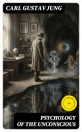
Psychology of the Unconscious (Summarized Edition): Enriched edition. Dream Analysis, Archetypal Symbols, and the Collective Unconscious: A Jungian Guide to Depth Psychology
Jan 2026 · Quickie Classics
Ebook
151
Pages
family_home
Eligible
info
About this ebook
Psychology of the Unconscious (1912), later revised as Symbols of Transformation, marks Jung's decisive break with Freud. Interpreting the fantasies of "Miss Miller" alongside solar myths, mystery cults, and religious motifs, Jung argues that libido is a general psychic energy whose symbolic transformations shape neurosis and culture. The book's erudite, citation-rich style fuses clinical observation with comparative mythology and philology, introducing amplification and foreshadowing a collective layer of the psyche. In the contentious context of early psychoanalysis, it proposes a broader symbolic hermeneutics of the unconscious. Jung, a Swiss psychiatrist trained at Burghölzli under Eugen Bleuler, brought experimental word-association research and an uncommon command of classical sources. His collaboration—and mounting theoretical tension—with Freud sharpened his critique of pansexual explanations. Equally decisive were studies in religion and anthropology, which convinced him that patients' images echo patterns across cultures and epochs. Readers in psychology, literary studies, and religious history will find a demanding yet foundational text. Read it not merely as a case study but as a blueprint for symbolic interpretation that still informs depth psychology. Though some terms are dated, its core insight—symbolic meaning organizes psychic life—remains indispensable. Quickie Classics summarizes timeless works with precision, preserving the author's voice and keeping the prose clear, fast, and readable—distilled, never diluted. Enriched Edition extras: Introduction · Synopsis · Historical Context · Author Biography · Brief Analysis · 4 Reflection Q&As · Editorial Footnotes.
Psychology of the Unconscious (1912), later revised as Symbols of Transformation, marks Jung's decisive break with Freud. Interpreting the fantasies of "Miss Miller" alongside solar myths, mystery cults, and religious motifs, Jung argues that libido is a general psychic energy whose symbolic tran...
About the author
Carl Gustav Jung (1875–1961) was a pioneer of deep psychology and one of the most prominent thinkers of the 20th century. His work laid the foundation for what would become analytical psychology, offering a rich understanding of the human psyche through concepts such as archetypes, the collective unconscious, and individuation. A former disciple of Freud, Jung's scholarship diverged, focusing on areas where he believed Freud had fallen short, particularly in the realms of myth, religion, and symbol. 'Psychology of The Unconscious', a seminal work, represents his early foray into the exploration of the dynamic relationship between the conscious and the unconscious mind (Jung, 1912). In this work, he elaborates on the function of dreams, delving into the symbolism contained within them and their implications for the individuation process. Jung's literary style combines the rigor of scientific inquiry with a profound grasp of mythological and cultural narratives, infusing his theoretical concepts with a sense of the universal and timeless aspects of human experience. His theories have not only influenced psychology but have permeated various disciplines including philosophy, religion, literature, and art, cementing his status as a crucial figure in the intellectual history of the modern world.
Carl Gustav Jung (1875–1961) was a pioneer of deep psychology and one of the most prominent thinkers of the 20th century. His work laid the foundation for what would become analytical psychology, offering a rich understanding of the human psyche through concepts such as archetypes, the collective...
Rate this ebook
Tell us what you think.
Reading information
Smartphones and tablets
Install the Google Play Books app for Android and iPad/iPhone. It syncs automatically with your account and allows you to read online or offline wherever you are.
Laptops and computers
You can listen to audiobooks purchased on Google Play using your computer's web browser.
eReaders and other devices
To read on e-ink devices like Kobo eReaders, you'll need to download a file and transfer it to your device. Follow the detailed Help Center instructions to transfer the files to supported eReaders.