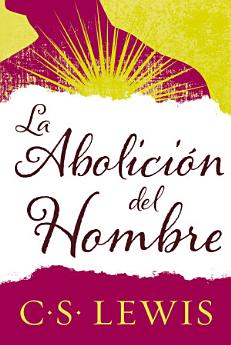
abolición del hombre
About this ebook
En muchos sentidos, C. S. Lewis predijo el futuro. «Previó el auge de las tendencias que estamos experimentando en estos tiempos: el emotivismo ético, la autoridad a veces incuestionable de la ciencia y el creciente uso que hacen los gobiernos de la tecnología para controlar a sus poblaciones». —The Gospel Coalition, Joseph A. Kohm Jr.
La abolición del hombre analiza por qué no deberíamos escuchar siempre solo a la razón y dejar de lado nuestras emociones. Lewis sostiene que la razón sin emoción no existe. Desacredita los argumentos de que la forma purista de la razón es el instinto, que las acciones benévolas se encontrarán persiguiendo la ciencia y que la ciencia será la mejor brújula moral que seguir para la humanidad. Lewis demuestra que los absolutos morales existen y son universales en todos los tiempos.
Estas páginas recogen una serie de conferencias sobre educación que Lewis pronunció durante tres noches en la Universidad de Durham. Es un libro para los seguidores de C. S. Lewis y para cualquiera que desee comprender mejor las virtudes morales tradicionales y cómo influyen en su vida. Lewis dijo: «Si nada es evidente por sí mismo, entonces nada puede demostrarse». Debe haber verdades evidentes que puedan aplicarse en todas partes.
-----
In this graceful work, C.S. Lewis reflects on society and nature and the challenges of how best to educate our children. He eloquently argues that we need as a society to underpin reading and writing with lessons in morality and in the process both educate and re-educate ourselves.
In many ways C. S. Lewis predicted the future. “He foresaw the rise of trends we’re currently experiencing: ethical emotivism, the sometimes unquestioned authority of science, and the increasing use of technology by states to control their populations.” –The Gospel Coalition, Joseph A. Kohm Jr.
The Abolition of Man discusses why we shouldn’t always listen to only reason and cut out our emotions. Lewis argues that reason without emotion there is not a reality. He debunks arguments that the purist form of reason is instinct, that benevolent actions will be found through pursuing science, and that science will be the best moral compass for mankind to follow. Lewis proves that moral absolutes do exist and they are universal throughout all of time.
This is a book for C. S. Lewis fans and anyone who wants to better understand traditional moral virtues and how they impact your life. Lewis said, “If nothing is self-evident then nothing can be proved.” There must be self-evident truths that can be applied everywhere. The book brings together a series of lectures on education that Lewis delivered over three nights at the University of Durham.
Discover more
Ratings and reviews
About the author
Clive Staples Lewis was born in 1898. Known as ""Jack"" by his friends, Lewis and his good friend J.R.R. Tolkien, the author of The Lord of the Rings trilogy, were part of a writer's club, The Inklings, who would meet at the local pub to discuss story ideas. Lewis's fascination with fairytales, myths, and ancient legends coupled with inspiration drawn from his childhood led him to write The Lion, the Witch and the Wardrobe, one of the best-loved books of all time. Six further books in the immensely popular Chronicles of Narnia followed, and the final title, The Last Battle, received the Carnegie Award, one of the highest marks of excellence in children's literature.