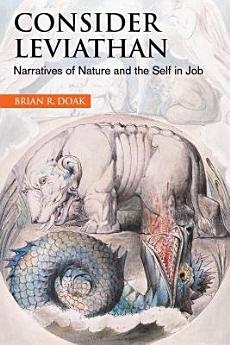
Consider Leviathan: Narratives of Nature and the Self in Job
Nov 2014 · Fortress Press
Ebook
208
Pages
Tools
info
About this ebook
Theologians and philosophers are turning again to questions
of the meaning, or non-meaning, of the natural world for human
self-understanding. Brian R. Doak observes that the book of Job, more than any
other book in the Bible, uses metaphors drawn from the natural world,
especially of plants and animals, as raw material for thinking about human
suffering. Doak argues that Job should be viewed as an anthropological “ground
zero” for the traumatic definition of the post-exilic human self in ancient
Israel. Furthermore, the battered shape of the Joban experience should provide
a starting point for reconfiguring our thinking about “natural theology” as a
category of intellectual history in the ancient world. Doak examines how the
development of the human subject is portrayed in the biblical text in either
radical continuity or discontinuity with plants and animals. Consider
Leviathan explores the text at the intersection of anthropology, theology,
and ecology, opening up new possibilities for charting the view of nature in
the Hebrew Bible.
Theologians and philosophers are turning again to questions
of the meaning, or non-meaning, of the natural world for human
self-understanding. Brian R. Doak observes that the book of Job, more than any
other book in the Bible, uses metaphors drawn from the natural world,
especially of plants and...
Discover more
About the author
Brian R. Doak is assistant professor of biblical studies and faculty fellow in the William Penn Honors Program at George Fox University in Newberg, Oregon. His first book, The Last of the Rephaim: Conquest and Cataclysm in the Heroic Ages of Ancient Israel, was published in 2013, and he is co-author of The Bible: Ancient Context and Ongoing Community (2014).
Brian R. Doak is assistant professor of biblical studies and faculty fellow in the William Penn Honors Program at George Fox University in Newberg, Oregon. His first book, The Last of the Rephaim: Conquest and Cataclysm in the Heroic Ages of Ancient Israel, was published in 2013, and he is co-au...
Rate this ebook
Tell us what you think.
Reading information
Smartphones and tablets
Install the Google Play Books app for Android and iPad/iPhone. It syncs automatically with your account and allows you to read online or offline wherever you are.
Laptops and computers
You can listen to audiobooks purchased on Google Play using your computer's web browser.
eReaders and other devices
To read on e-ink devices like Kobo eReaders, you'll need to download a file and transfer it to your device. Follow the detailed Help Center instructions to transfer the files to supported eReaders.