eBook 정보
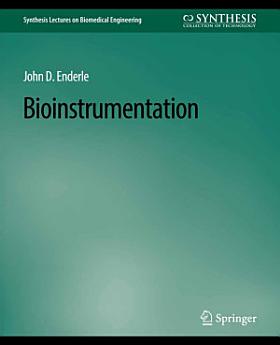
This short book provides basic information about bioinstrumentation and electric circuit theory. Many biomedical instruments use a transducer or sensor to convert a signal created by the body into an electric signal. Our goal here is to develop expertise in electric circuit theory applied to bioinstrumentation. We begin with a description of variables used in circuit theory, charge, current, voltage, power and energy. Next, Kirchhoff's current and voltage laws are introduced, followed by resistance, simplifications of resistive circuits and voltage and current calculations. Circuit analysis techniques are then presented, followed by inductance and capacitance, and solutions of circuits using the differential equation method. Finally, the operational amplifier and time varying signals are introduced. This lecture is written for a student or researcher or engineer who has completed the first two years of an engineering program (i.e., 3 semesters of calculus and differential equations). Aconsiderable effort has been made to develop the theory in a logical manner—developing special mathematical skills as needed. At the end of the short book is a wide selection of problems, ranging from simple to complex.
This short book provides basic information about bioinstrumentation and electric circuit theory. Many biomedical instruments use a transducer or sensor to convert a signal created by the body into an electric signal. Our goal here is to develop expertise in electric circuit theory applied to bioi...
콘텐츠 둘러보기
이 eBook 평가
의견을 알려주세요.
읽기 정보
스마트폰 및 태블릿
노트북 및 컴퓨터
컴퓨터의 웹브라우저를 사용하여 Google Play에서 구매한 오디오북을 들을 수 있습니다.
eReader 및 기타 기기
Kobo eReader 등의 eBook 리더기에서 읽으려면 파일을 다운로드하여 기기로 전송해야 합니다. 지원되는 eBook 리더기로 파일을 전송하려면 고객센터에서 자세한 안내를 따르세요.