About this ebook
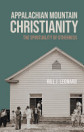
Religion has long been a source of identity for many Southerners, and the Appalachian areas in particular have proven to be a virtual fortress protecting faith and culture. Yet, in a region popularly thought to be religiously homogeneous, congregations reflect a wide range of doctrinal differences over such issues as conversion, ministerial leadership, and the authority on which a church bases its core beliefs.
Profiling the prominent Christian traditions in southern Appalachia, this book brings together contributions by twenty scholars who have long studied the religious practices found in the region’s cities, small towns, and rural communities. These authors provide insights into not only the independent mountain churches that are strongly linked to local customs but also the mainline and other religious bodies that have a significant presence in Appalachia but are not strictly associated with it. The essays explore the nature of ministry within these various churches, show the impact of broader culture on religion in the region, and consider the question of whether previously isolated, tradition-based churches can retain their distinctiveness in a changing world.
One group of chapters focuses on elements of mountain religion as seen in the beliefs and practices of mountain Holiness folk, serpent handlers, and various Baptist traditions. Later chapters review the history and activities of other denominations, including Southern Baptist, Presbyterian, Wesleyan/Holiness, Church of God, and Roman Catholic. Also considered are the economic history of the region, popular religiosity, and the role of church-affiliated colleges. Taken together, these essays offer a richly nuanced understanding of Christianity in Appalachia.
Bill J. Leonard is dean of the Divinity School at Wake Forest University. His other books include Out of One, Many: American Religion and American Pluralism and God’s Last and Only Hope: The Fragmentation of the Southern Baptist Convention.
The Contributors: Monica Kelly Appleby, Donald N. Bowdle, Mary Lee Daugherty, Melvin E. Dieter, Howard Dorgan, Anthony Dunnavant, Gary Farley, Samuel S. Hill, Loyal Jones, Helen Lewis, Charles H. Lippy, Bill J. Leonard, Deborah Vansau McCauley, Lou F. McNeil, Marcia Clark Myers, Bennett Poage, Ira Read, James Sessions, Barbara Ellen Smith, H. Davis Yeuell.
Religion has long been a source of identity for many Southerners, and the Appalachian areas in particular have proven to be a virtual fortress protecting faith and culture. Yet, in a region popularly thought to be religiously homogeneous, congregations reflect a wide range of doctrinal difference...
Discover more
About the author
Bill J. Leonard is dean of the Divinity School at Wake Forest University. His other books include Out of One, Many: American Religion and American Pluralism and God’s Last and Only Hope: The Fragmentation of the Southern Baptist Convention.
With contributions by: Monica Kelly Appleby, Donald N. Bowdle, Mary Lee Daugherty, Melvin E. Dieter, Howard Dorgan, Anthony Dunnavant, Gary Farley, Samuel S. Hill, Loyal Jones, Helen Lewis, Charles H. Lippy, Bill J. Leonard, Deborah Vansau McCauley, Lou F. McNeil, Marcia Clark Myers, Bennett Poage, Ira Read, James Sessions, Barbara Ellen Smith, H. Davis Yeuell.
Bill J. Leonard is dean of the Divinity School at Wake Forest University. His other books include Out of One, Many: American Religion and American Pluralism and God’s Last and Only Hope: The Fragmentation of the Southern Baptist Convention.
With contributions by: Monica Kelly Appleby, Donald N. B...
Rate this ebook
Tell us what you think.
Reading information
Smartphones and tablets
Install the Google Play Books app for Android and iPad/iPhone. It syncs automatically with your account and allows you to read online or offline wherever you are.
Laptops and computers
You can listen to audiobooks purchased on Google Play using your computer's web browser.
eReaders and other devices
To read on e-ink devices like Kobo eReaders, you'll need to download a file and transfer it to your device. Follow the detailed Help Center instructions to transfer the files to supported eReaders.