O ovoj e-knjizi
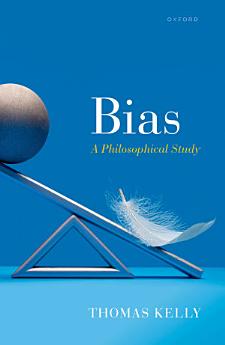
Bias seems to be everywhere. Biased media outlets decisively influence the political opinions and votes of millions of people. Discriminatory policies favor some racial groups over others. We tend to judge ourselves more favorably than our peers, and more favorably than the evidence warrants. But what is it, exactly, for a person or thing to be biased? In Bias: A Philosophical Study, Thomas Kelly explores a number of foundational questions about the nature of bias and our practices of attributing it. He develops a general framework for thinking about bias, the norm theoretic account, and shows how that framework illuminates much that we say and think about bias in both everyday life and the sciences. He argues provocatively that both morality and rationality sometimes require us to be biased; that groups of people can be biased even if none of their members are; that we are often rationally required to believe that those who disagree with us are biased, even if we know absolutely nothing about why they believe as they do or about their psychologies; and that whether someone counts as biased is often a relative matter. He defends the possibility of what he calls 'biased knowing' and argues that the phenomenon has significant implications for both philosophical methodology and scepticism. A central aim of the book is to expand the range of issues that have thus far been considered under the heading 'the philosophy of bias' by putting new theoretical questions on the table and proposing bold answers that can serve as starting points for future inquiry.
Bias seems to be everywhere. Biased media outlets decisively influence the political opinions and votes of millions of people. Discriminatory policies favor some racial groups over others. We tend to judge ourselves more favorably than our peers, and more favorably than the evidence warrants. But...
O autoru
Thomas Kelly is a Professor of Philosophy at Princeton University, where he has taught since 2004. He has written a number of widely cited and influential papers in epistemology and related areas, addressing topics such as the epistemic significance of disagreement, the relationship between theoretical and practical rationality, and foundational questions about the nature of evidence. Prior to coming to Princeton, he taught at the University of Notre Dame and was a Junior Fellow in the Harvard Society of Fellows, where he also received his PhD.
Thomas Kelly is a Professor of Philosophy at Princeton University, where he has taught since 2004. He has written a number of widely cited and influential papers in epistemology and related areas, addressing topics such as the epistemic significance of disagreement, the relationship between theor...
Ocijenite ovu e-knjigu
Recite nam šta mislite.
Informacije o čitanju
Pametni telefoni i tableti
Instalirajte aplikaciju Google Play Knjige za Android i iPad/iPhone uređaje. Aplikacija se automatski sinhronizira s vašim računom i omogućava vam čitanje na mreži ili van nje gdje god da se nalazite.
Laptopi i računari
Audio knjige koje su kupljene na Google Playu možete slušati pomoću web preglednika na vašem računaru.
Elektronički čitači i ostali uređaji
Da čitate na e-ink uređajima kao što su Kobo e-čitači, morat ćete preuzeti fajl i prenijeti ga na uređaj. Pratite detaljne upute Centra za pomoć da prenesete fajlove na podržane e-čitače.