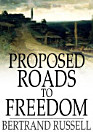
Proposed Roads To Freedom: Restored Classics to Go Edition
About this ebook
Discover more
About the author
Bertrand Russell was one of the most brilliant and wide-ranging thinkers of the twentieth century, a philosopher, logician, essayist, social critic, and public intellectual whose life stretched from the late Victorian era into the nuclear age. Born into British aristocracy in 1872, he was shaped by early loss, rigorous education, and a restless intellectual hunger that led him from mathematics and philosophy into public debate on war, education, religion, and the responsibilities of modern citizenship. He became famous not only for groundbreaking work in logic and analytic philosophy, but also for his fearless essays and lectures on politics, freedom, and human happiness, which made difficult ideas vivid and accessible to ordinary readers. Across his long career, he argued for reason over dogma, individual liberty over oppression, and humane skepticism over blind certainty, while never hesitating to challenge governments, institutions, or popular opinion. The enduring power of his writing lies in its clarity, moral urgency, and belief that ideas matter in everyday life: his reflections on power, inequality, education, and peace still speak directly to a world struggling with polarization, authoritarianism, and the search for meaning. Russell's legacy remains immense because he showed that philosophy can be both intellectually exacting and socially engaged, and that a writer can help shape public conscience as well as academic thought. Readers who enjoy sharp reasoning, bold opinions, and essays that connect big ideas to urgent human problems will find him especially rewarding.