Religious Influences on Economic Thinking: The Origins of Modern Economics
Aug 2024 · MIT Press
Ebook
98
Pages
Tools
info
family_home
Eligible
info
About this ebook
How religious thinking was—and remains—a central influence shaping economics.
The conventional view of economics is that the field was a product of the Enlightenment and, therefore, bore no relation to religious ideas. But is this true? In Religious Influences on Economic Thinking, Benjamin Friedman shows that religious thinking was, in fact, a powerful force in shaping the initial development of modern Western economics and that it has remained an influence on economic thinking ever since. Friedman argues that an important influence enabling the insights of Adam Smith and his contemporaries was the new and highly controversial line of religious thinking at that time in the English-speaking Protestant world.
Friedman explains that the influence of religious thinking on modern economic thought at the field’s inception established resonances that have persisted through the subsequent centuries, even as the economic context has evolved and the questions economists ask have shifted along with it. Because we are largely not conscious of these influences, neither in the past nor as they are at work today, we are sometimes puzzled when we stumble across evidence of them—for example, in the otherwise hard-to-explain attitudes that many of our fellow citizens express on issues like estate taxes, business regulation, and environmental restrictions. But they are still at work. Understanding them can only enhance the economics profession’s capacity to contribute to our ongoing public discussion of the important questions on which the discipline so usefully bears.
The conventional view of economics is that the field was a product of the Enlightenment and, therefore, bore no relation to religious ideas. But is this true? In Religious Influences on Economic Thinking, Benjamin Friedman shows that religious thinking was, in fact, a powerful force in shaping the initial development of modern Western economics and that it has remained an influence on economic thinking ever since. Friedman argues that an important influence enabling the insights of Adam Smith and his contemporaries was the new and highly controversial line of religious thinking at that time in the English-speaking Protestant world.
Friedman explains that the influence of religious thinking on modern economic thought at the field’s inception established resonances that have persisted through the subsequent centuries, even as the economic context has evolved and the questions economists ask have shifted along with it. Because we are largely not conscious of these influences, neither in the past nor as they are at work today, we are sometimes puzzled when we stumble across evidence of them—for example, in the otherwise hard-to-explain attitudes that many of our fellow citizens express on issues like estate taxes, business regulation, and environmental restrictions. But they are still at work. Understanding them can only enhance the economics profession’s capacity to contribute to our ongoing public discussion of the important questions on which the discipline so usefully bears.
How religious thinking was—and remains—a central influence shaping economics.
The conventional view of economics is that the field was a product of the Enlightenment and, therefore, bore no relation to religious ideas. But is this true? In Religious Influences on Economic Thinking, Benjamin Frie...
Discover more
About the author
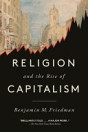
Benjamin M. Friedman is William Joseph Maier Professor of Political Economy at Harvard University. He is the author of Religion and the Rise of Capitalism and The Moral Consequences of Economic Growth, and a member of the American Academy of Arts and Sciences and the Council on Foreign Relations.
Benjamin M. Friedman is William Joseph Maier Professor of Political Economy at Harvard University. He is the author of Religion and the Rise of Capitalism and The Moral Consequences of Economic Growth, and a member of the American Academy of Arts and Sciences and the Council on Foreign Relations.
Rate this ebook
Tell us what you think.
Reading information
Smartphones and tablets
Install the Google Play Books app for Android and iPad/iPhone. It syncs automatically with your account and allows you to read online or offline wherever you are.
Laptops and computers
You can listen to audiobooks purchased on Google Play using your computer's web browser.
eReaders and other devices
To read on e-ink devices like Kobo eReaders, you'll need to download a file and transfer it to your device. Follow the detailed Help Center instructions to transfer the files to supported eReaders.