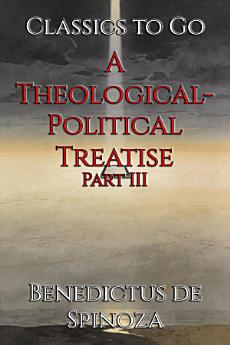
A Theological-Political Treatise: Restored Classics to Go Edition

· Otbebookpublishing
Ebook
67
Pages
Eligible

About this ebook

Spinoza's bold reading of Scripture strips away mystery to reveal a religion of moral clarity, public teaching, and inward devotion. He first examines the Apostles' Epistles, arguing that they were written not as prophetic revelations but as the free, reasoned guidance of teachers who had received Christ's message and adapted it for different audiences. Their courteous, qualified language stands apart from the absolute formulas of the Old Testament prophets, and even Moses' arguments are treated as imaginative exhortations rather than strict proofs. From there, Spinoza turns to the nature of divine law itself. God's true covenant, he insists, is written in the human heart, not bound to any material book, and Scripture is sacred only insofar as it fosters piety, justice, and charity. The Bible's authority lies in its central doctrines, not in every preserved word, and its essential teaching—love of God and neighbor—has remained intact despite textual loss, human editing, and differing accounts in the Gospels. He closes by rejecting speculative religion, arguing that Scripture demands obedience and practical righteousness, while deeper knowledge of God belongs to philosophy and to the distinct understanding given to Moses and the prophets. This edition has been fully restored with modern typesetting, custom cover design.
Spinoza's bold reading of Scripture strips away mystery to reveal a religion of moral clarity, public teaching, and inward devotion. He first examines the Apostles' Epistles, arguing that they were written not as prophetic revelations but as the free, reasoned guidance of teachers who had receive...

Discover more

About the author

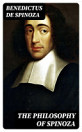
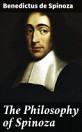
Benedictus de Spinoza, better known simply as Spinoza, was born in Amsterdam in 1632 to a Portuguese-Jewish family that had sought refuge in the Netherlands, and his life was shaped by both the intellectual freedom and the religious tensions of the Dutch Golden Age. After receiving a traditional education, he was gradually drawn into philosophy and the new science, and his unorthodox ideas eventually led to his excommunication from the Jewish community at a young age. He lived modestly, supporting himself through lens grinding while developing a system of thought that would make him one of the most radical and influential philosophers of the early modern world. His writings challenged conventional ideas about God, nature, freedom, scripture, and political authority, and he became especially important for arguing that reason and tolerance are essential to a healthy society. Spinoza's work often explores the relationship between human emotion and understanding, the power of superstition, and the possibility of living with greater freedom through clear thought and self-knowledge. These concerns remain strikingly contemporary in an age still marked by ideological conflict, misinformation, and debates over religious and political liberty. Though he died in 1677, his legacy endures in philosophy, political theory, theology, and psychology, where he is admired for his courage, rigor, and commitment to intellectual independence. Readers who enjoy challenging ideas, questions about faith and reason, and deeply original thinking about human freedom will find Spinoza especially rewarding.
Benedictus de Spinoza, better known simply as Spinoza, was born in Amsterdam in 1632 to a Portuguese-Jewish family that had sought refuge in the Netherlands, and his life was shaped by both the intellectual freedom and the religious tensions of the Dutch Golden Age. After receiving a traditional ...

Rate this ebook

Tell us what you think.

Reading information

Smartphones and tablets
Install the Google Play Books app for Android and iPad/iPhone. It syncs automatically with your account and allows you to read online or offline wherever you are.
Laptops and computers
You can listen to audiobooks purchased on Google Play using your computer's web browser.
eReaders and other devices
To read on e-ink devices like Kobo eReaders, you'll need to download a file and transfer it to your device. Follow the detailed Help Center instructions to transfer the files to supported eReaders.