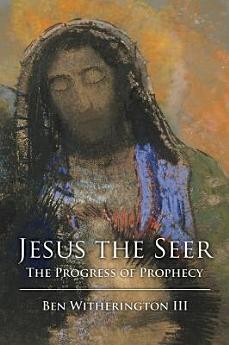
About this ebook
Increasingly,
scholars recognize that prophetic traditions, expressions, and experiences
stand at the heart of most religions in the ancient Mediterranean world. This
is no less true for the world of Judaism and Jesus. Ben Witherington III offers
an extensive, cross-cultural survey of the broader expressions of prophecy in
its ancient Mediterranean context, beginning with Mari, moving to biblical
figures not often regarded as prophets‒‒Balaam, Deborah, Moses, and Aaron‒‒and
to the apocalyptic seer in postexilic prophecy, showing that no single pattern
describes all prophetic figures. The consequence is that different aspects of
Jesus’s activity touch upon prophetic predecessors: his miracles, on Elijah and
Elisha; his self-understanding as the Son of Man, on Daniel and 1 Enoch; his
warnings of woe and judgment, on the “writing prophets” in Judean tradition;
and his messianic entry into Jerusalem, on Zechariah 9. Witherington also
surveys the phenomenon of apocalyptic prophecy in early Christianity, including
Paul, Revelation, the Didache, Hermas, and the Montanist movement. Jesus the
Seer is a worthy complement to Witherington’s other volume on Jesus, Jesus
the Sage (Fortress Press, 2000).
Increasingly,
scholars recognize that prophetic traditions, expressions, and experiences
stand at the heart of most religions in the ancient Mediterranean world. This
is no less true for the world of Judaism and Jesus. Ben Witherington III offers
an extensive, cross-cultural survey of the broade...
Discover more
About the author
Ben Witherington III is Amos Professor of New Testament for Doctoral Studies at Asbury Theological Seminary in Wilmore, Kentucky and is on the doctoral faculty at the University of St. Andrews in Scotland; he has also taught at Ashland Theological Seminary, Vanderbilt University, Duke Divinity School, and Gordon-Conwell Theological Seminary.
Ben Witherington III is Amos Professor of New Testament for Doctoral Studies at Asbury Theological Seminary in Wilmore, Kentucky and is on the doctoral faculty at the University of St. Andrews in Scotland; he has also taught at Ashland Theological Seminary, Vanderbilt University, Duke Divinity Sc...
Rate this ebook
Tell us what you think.
Reading information
Smartphones and tablets
Install the Google Play Books app for Android and iPad/iPhone. It syncs automatically with your account and allows you to read online or offline wherever you are.
Laptops and computers
You can listen to audiobooks purchased on Google Play using your computer's web browser.
eReaders and other devices
To read on e-ink devices like Kobo eReaders, you'll need to download a file and transfer it to your device. Follow the detailed Help Center instructions to transfer the files to supported eReaders.