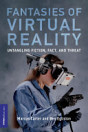
The Limits of Immersion: Disability and Virtual Reality
About this ebook
Virtual Reality (VR) promises immersion for all, yet it is built around assumptions of able-bodied users that leave many disabled people behind.
Drawing on original research with users, care providers, and developers, this book examines how mainstream VR design encodes a narrow idea of the ‘normal’ body – and the real costs of that choice. It shows how decisions made at the design stage, often invisible to non-disabled users, create barriers around vision, movement, and sensory experience.
Moving beyond critique, it argues for a fundamental rethinking of VR design centring diverse bodies and minds. In doing so, it not only reframes accessibility, but expands what VR can be,
and who it is truly for.
Discover more
About the author
Ben Egliston is Australian Research Council DECRA Fellow and Senior Lecturer in Digital Cultures at the University of Sydney.
Marcus Carter is Australian Research Council Future Fellow and Professor in Human-Computer Interaction at the University of Sydney.
Kate Euphemia Clark works in government policy, and was previously a postdoctoral research fellow at the University of Sydney.
Gerard Goggin is Distinguished Professor in the Institute for Culture and Society at Western Sydney University, and Honorary Professor in the Centre for Disability Research and Policy at the University of Sydney.
Kuansong Victor Zhuang is Assistant Professor in Disability Communication at Nanyang Technological University.
Wenqi Tan is a PhD student at the University of Sydney.
Joanne Gray is Senior Lecturer in Digital Cultures at the University of Sydney.