About this ebook
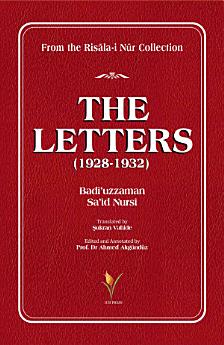
Travel was not easy and Badī’uzzaman communicated by letter with those of his students who lived in towns and villages other than Barla. Largely in reply to their questions, the letters offer important guidance on numerous points of belief and Islām, explained in the light of the Risāla-i Nūr and its way, and in the face of the misguidance of the times. Indeed, they form an important source and authority on many subjects for Muslims today.
Since some of his students had previously been attached to Sufi orders, he sometimes explains the way of the Risāla-i Nūr to them through comparisons with the Sufi way. The primary aim of the Risāla-i Nūr is the saving and strengthening of belief. Employing both the intellect and the heart, Badī’uzzaman described it as “reality” (ḥaqīqah) and Shari’a, rather than ṭarīqah , that is Sufism.
It is the highway of the Qur’an, which teaches the true affirmation of divine unity; true and certain belief, attained in a short time through investigation and the exercise of the reason. The direct way to reality and knowledge of Allah, which is the way of the Companions of Prophet (UWBP) through “the legacy of prophethood.”
Some of the letters offer guidance and encouragement to the students by answering criticisms and misrepresentations put forward by those antithetical to religion, concerning both points of Islām and Badī’uzzaman himself. Others expose the plans to corrupt Islām through the introduction of innovations. They show how on the one hand Badī’uzzaman was absolutely uncompromising in the face of enemies to religion, and on the other his complete fairness and moderateness in adjudicating points of conflict and controversy within Islām. All these illustrate his profound knowledge of many subjects, as well as the clarity and power of his style, which is based on logic.