À propos de cet e-book
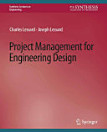
This textbook is intended for undergraduate students (juniors or seniors) in Biomedical Engineering, with the main goal of helping these students learn about classical control theory and its application in physiological systems. In addition, students should be able to apply the Laboratory Virtual Instrumentation Engineering Workbench (LabVIEW) Controls and Simulation Modules to mammalian physiology. The first four chapters review previous work on differential equations for electrical and mechanical systems. Chapters 5 through 8 present the general types and characteristics of feedback control systems and foot locus, frequency response, and analysis of stability and margins. Chapters 9 through 12 cover basic LabVIEW programming, the control module with its pallets, and the simulation module with its pallets. Chapters 13 through 17 present various physiological models with several LabVIEW control analyses. These chapters cover control of the heart (heart rate, stroke volume, and cardiacoutput), the vestibular system and its role in governing equilibrium and perceived orientation, vestibulo-ocular reflex in stabilizing an image on the surface of the retina during head movement, mechanical control models of human gait (walking movement), and the respiratory control model. The latter chapters (Chapters 13-17) combine details from my class lecture notes in regard to the application of LabVIEW control programming by the class to produce the control virtual instruments and graphical displays (root locus, Bode plots, and Nyquist plot). This textbook was developed in cooperation with National Instruments personnel. Table of Contents: Electrical System Equations / Mechanical Translation Systems / Mechanical Rotational Systems / Thermal Systems and Systems Representation / Characteristics and Types of Feedback Control Systems / Root Locus / Frequency Response Analysis / Stability and Margins / Introduction to LabVIEW / Control Design in LabVIEW / Simulation in LabVIEW / LabVIEW Control Design and Simulation Exercise / Cardiac Control / Vestibular Control System / Vestibulo-Ocular Control System / Gait and Stance Control System / Respiratory Control System
This textbook is intended for undergraduate students (juniors or seniors) in Biomedical Engineering, with the main goal of helping these students learn about classical control theory and its application in physiological systems. In addition, students should be able to apply the Laboratory Virtual...
En voir d'autres
À propos de l'auteur
Charles S. Lessard, Ph.D., Lt Colonel, United States Air Force (Retired), is an Associate Professor in the Department of Biomedical Engineering at Texas A&M University. His areas of specialization include Physiological Signal Processing, Design of Virtual Medical Instrumentation, Noninvasive Physiological Measurements, Vital Signs, Nystagmus, Sleep & Performance Decrement, Spatial Disorientation, G-induced Loss of Consciousness G-LOC). Neural Network Analysis. Dr. Lessard received a B.S. in Electrical Engineering from Texas A&M (1958) a M.S. from the U.S. Air Force Institute of Technology (1965), and Ph.D. from Marquette University (1972). As an officer in the U.S. Air Force, Lessard was a pilot of F86L Interceptors and B-52G Strategic Bombers. He also served as Research Scientist and Chief of Biomedical Engineering Research for the Aerospace Medical Division of the School of Aerospace Medicine, at Brooks Air Force Base, Texas. In this capacity he planned and directed efforts in biomedical projects associated with the Manned Orbiting Laboratory Program (MOL), developed medical instrumentation (EEG Analyzer), conducted research on computer on the analysis of sleep brainwaves and cardiac signals, and the effects of zero-gravity (0-G) on the cardiac response during valsalva maneuvers. U.S. Air Force Medical Research Laboratories, Wright-Patterson AFB, Lessard with Biocybernetics Wing Engineering and worked on neural networks, self-organizing controls (SOC), and remotely piloted vehicles. He was the Field Office Director. Program Manager, with the Electronics Systems Division of the Air Force Systems Command during the installation and testing of Spain's Automated Air Defense System as a part of the Treaty of Friendship and Cooperation between the US and Spain. Dr. Lessard retired from the U.S. Air Force in 1981 after serving as the Deputy Director Bioengineering and Biodynamic Division at Aerospace Medical Research Laboratory (AMRL), Wright-Patterson Air Forces. He began his academic career with Texas A&M University in 1981. His program management experiences are applied in his two Senior Design Courses.
Charles S. Lessard, Ph.D., Lt Colonel, United States Air Force (Retired), is an Associate Professor in the Department of Biomedical Engineering at Texas A&M University. His areas of specialization include Physiological Signal Processing, Design of Virtual Medical Instrumentation, Noninvasive Phys...
Donner une note à cet e-book
Dites-nous ce que vous en pensez.
Informations sur la lecture
Smartphones et tablettes
Installez l'application Google Play Livres pour Android et iPad ou iPhone. Elle se synchronise automatiquement avec votre compte et vous permet de lire des livres en ligne ou hors connexion, où que vous soyez.
Ordinateurs portables et de bureau
Vous pouvez écouter les livres audio achetés sur Google Play à l'aide du navigateur Web de votre ordinateur.
Liseuses et autres appareils
Pour lire sur des appareils e-Ink, comme les liseuses Kobo, vous devez télécharger un fichier et le transférer sur l'appareil en question. Suivez les instructions détaillées du Centre d'aide pour transférer les fichiers sur les liseuses compatibles.