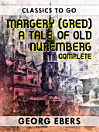
Barbara Blomberg Complete
ago 2018 · Otbebookpublishing
Libro electrónico
463
Páginas
family_home
Apto
info
Acerca de este libro electrónico
Excerpt: "The sun sometimes shone brightly upon the little round panes of the ancient building, the Golden Cross, on the northern side of the square, which the people of Ratisbon call "on the moor"; sometimes it was veiled by gray clouds. A party of nobles, ecclesiastics, and knights belonging to the Emperor's train were just coming out. The spring breeze banged behind them the door of the little entrance for pedestrians close beside the large main gateway. The courtiers and ladies who were in the chapel at the right of the corridor started. "April weather!" growled the corporal of the Imperial Halberdiers to the comrade with whom he was keeping; guard at the foot of the staircase leading to the apartments of Charles V, in the second story of the huge old house. "St. Peter's day," replied the other, a Catalonian. "At my home fresh strawberries are now growing in the open air and roses are blooming in the gardens. Take it all in all, it's better to be dead in Barcelona than alive in this accursed land of heretics!" "Come, come," replied the other, "life is life! 'A live dog is better than a dead king,' says a proverb in my country.""
Excerpt: "The sun sometimes shone brightly upon the little round panes of the ancient building, the Golden Cross, on the northern side of the square, which the people of Ratisbon call "on the moor"; sometimes it was veiled by gray clouds. A party of nobles, ecclesiastics, and knights belonging to...
Descubrir más
Acerca del autor
Georg Ebers (1837-1898) was a pioneering German Egyptologist and historical novelist whose works bridged the gap between rigorous academic research and popular fiction. Born in Berlin, Ebers initially pursued law but soon shifted his focus to Egyptology, a field that was burgeoning in the 19th century. His academic career flourished when he discovered the Ebers Papyrus, one of the oldest medical documents in existence, which significantly advanced the study of ancient Egyptian medicine.Ebers' literary contributions are notable for their meticulous historical accuracy and vivid storytelling. He masterfully wove his extensive knowledge of ancient Egypt into his novels, making the distant past accessible and engaging for contemporary readers. His works often explored themes of cultural exchange, the clash of civilizations, and the enduring human spirit, resonating deeply with audiences of his time and beyond.Ebers was also a trailblazer in advocating for the inclusion of women in academic circles, a revolutionary idea in the male-dominated world of 19th-century scholarship. His progressive views on education and gender equality influenced many contemporary writers and thinkers, contributing to the broader movement for social reform.Despite his acclaim, Ebers was not without controversy. His blending of fact and fiction sometimes drew criticism from purists who questioned the historical liberties he took in his novels. However, this did not diminish his impact; instead, it highlighted the ongoing debate about the role of historical fiction in shaping our understanding of the past.Georg Ebers' legacy endures through his contributions to both Egyptology and literature, inspiring future generations to explore the rich tapestry of human history with curiosity and imagination.
Georg Ebers (1837-1898) was a pioneering German Egyptologist and historical novelist whose works bridged the gap between rigorous academic research and popular fiction. Born in Berlin, Ebers initially pursued law but soon shifted his focus to Egyptology, a field that was burgeoning in the 19th ce...
Califica este libro electrónico
Cuéntanos lo que piensas.
Información de lectura
Smartphones y tablets
Instala la app de Google Play Libros para Android y iPad/iPhone. Como se sincroniza de manera automática con tu cuenta, te permite leer en línea o sin conexión en cualquier lugar.
Laptops y computadoras
Para escuchar audiolibros adquiridos en Google Play, usa el navegador web de tu computadora.
Lectores electrónicos y otros dispositivos
Para leer en dispositivos de tinta electrónica, como los lectores de libros electrónicos Kobo, deberás descargar un archivo y transferirlo a tu dispositivo. Sigue las instrucciones detalladas que aparecen en el Centro de ayuda para transferir los archivos a lectores de libros electrónicos compatibles.