Sustainable Technologies for Value Addition to Biomass Waste

· · ·
· Elsevier
Ebook
625
Pages
Eligible

About this ebook

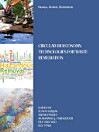
Sustainable Technologies for Value Addition to Biomass Waste introduces readers to revolutionary approaches for converting waste biomass into commercially viable products such as biofuels, materials, and microbial derivatives. This book explores detailed methodologies for transforming biomass waste, highlighting advanced techniques, reactor designs, and sustainable strategies. It provides critical insights into the feasibility, limitations, and applications of these technologies, making it a vital resource for professionals seeking to understand the intersection of sustainability and innovation in waste management.Beyond production technologies, the book delves into the physicochemical composition of biomass waste, explores marine biomass recycling, and examines the integration of artificial intelligence for efficient waste management. It offers a life cycle assessment framework to evaluate waste generation and conversion, emphasizing its role in advancing a circular economy while addressing environmental challenges. Readers will also benefit from discussions on commercial scalability and the broader impacts of these technologies on resource conservation and pollution reduction.Sustainable Technologies for Value Addition to Biomass Waste introduces readers to revolutionary approaches for converting waste biomass into commercially viable products such as biofuels, materials, and microbial derivatives. This book explores detailed methodologies for transforming biomass waste, highlighting advanced techniques, reactor designs, and sustainable strategies. It provides critical insights into the feasibility, limitations, and applications of these technologies, making it a vital resource for professionals seeking to understand the intersection of sustainability and innovation in waste management. - Actively contributes to a greener and more sustainable future by recognizing the vast potential of waste biomass as a valuable resource - Offers detailed production process flowsheets for various value-added products to gain a deeper understanding of the challenges and opportunities involved - Provides insights in commercially viable production processes for value-added products to embark on entrepreneurial ventures in the field - Inspires and enables harnessing the potential of waste biomass for positive environmental and economic impact
Sustainable Technologies for Value Addition to Biomass Waste introduces readers to revolutionary approaches for converting waste biomass into commercially viable products such as biofuels, materials, and microbial derivatives. This book explores detailed methodologies for transforming biomass was...

Discover more

About the author

Prof. Ashok Pandey is currently Executive Director, Centre for Energy and Environmental Sustainability-India, Lucknow. His major research and technological development interests are industrial and environmental biotechnology and energy biosciences, focusing on biomass to biofuels and chemicals, waste to wealth and energy, etc.

Dr. Abha Kumari is working in a capacity as an Associate Professor at Amity Institute of Biotechnology, Amity University, Noida, Uttar Pradesh. She obtained Ph.D. degree in Biometallurgy Engineering with above 20 years of experience in teaching and research. Her Research Area focuses on municipal waste management, bioprocess development, enzyme isolation and production, and biogas. She has worked with 3 government-funded projects from the Department of Biotechnology. She has published several book chapters and has about 25 research and review publications.

Dr. Smriti Shrivastava is an Associate Professor at the Amity Institute of Biotechnology, Amity University Uttar Pradesh, India, with over 15 years of teaching and research experience. earned her Ph.D. in Biotechnology from Birla Institute of Technology, Mesra, and her master’s degree in Applied Microbiology from the University of Madras, India. Dr. Shrivastava’s expertise includes microbial and industrial biotechnology, enzyme technology, biofuels, and enzyme-based nanomaterials. Her current research focuses on waste valorization using enzyme cocktails and lignin-nanoparticle-based biomass conversion.

Mohammad J. Taherzadeh is professor in Biotechnology since 2004 at University of Borås in Sweden. He is also director of Resource Recovery, a research profile with about 50 researchers to convert wastes to energy and value-added products. Prof. Taherzadeh has PhD in Bioscience and MSc and Bsc in Chemical Engineering. He is working on converting wastes and residuals to ethanol, biogas, fish feed and superabsorbents, in which fermentation development using bacteria, yeast and filamentous fungi has a heavy weight. Prof. Taherzadeh has more than 120 publications in scientific peer-reviewed journals, 10 book chapters and two patents about filamentous fungi. Mohammad is the panel chairman of “biotechnology, chemical technology and environmental technology of Swedish Research Council, and also in the editorial board of Bioresource Technology and BioResources.
Prof. Ashok Pandey is currently Executive Director, Centre for Energy and Environmental Sustainability-India, Lucknow. His major research and technological development interests are industrial and environmental biotechnology and energy biosciences, focusing on biomass to biofuels and chemicals, w...

Rate this ebook

Tell us what you think.

Reading information

Smartphones and tablets
Install the Google Play Books app for Android and iPad/iPhone. It syncs automatically with your account and allows you to read online or offline wherever you are.
Laptops and computers
You can listen to audiobooks purchased on Google Play using your computer's web browser.
eReaders and other devices
To read on e-ink devices like Kobo eReaders, you'll need to download a file and transfer it to your device. Follow the detailed Help Center instructions to transfer the files to supported eReaders.