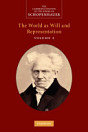
The Essays of Arthur Schopenhauer; the Art of Controversy: Restored Classics to Go Edition
Mar 2020 · Otbebookpublishing
Ebook
76
Pages
family_home
Eligible
info
About this ebook
The Art of Being Right: 38 Ways to Win an Argument (also The Art of Controversy, or Eristic Dialectic: The Art of Winning an Argument; German: Eristische Dialektik: Die Kunst, Recht zu behalten; 1831) is an acidulous, sarcastic treatise written by the German philosopher Arthur Schopenhauer.[1] In it, Schopenhauer examines a total of thirty-eight methods of showing up one's opponent in a debate. He introduces his essay with the idea that philosophers have concentrated in ample measure on the rules of logic, but have not (especially since the time of Immanuel Kant) engaged with the darker art of the dialectic, of controversy. Whereas the purpose of logic is classically said to be a method of arriving at the truth, dialectic, says Schopenhauer, "...on the other hand, would treat of the intercourse between two rational beings who, because they are rational, ought to think in common, but who, as soon as they cease to agree like two clocks keeping exactly the same time, create a disputation, or intellectual contest." This edition has been fully restored with modern typesetting, custom cover design.
The Art of Being Right: 38 Ways to Win an Argument (also The Art of Controversy, or Eristic Dialectic: The Art of Winning an Argument; German: Eristische Dialektik: Die Kunst, Recht zu behalten; 1831) is an acidulous, sarcastic treatise written by the German philosopher Arthur Schopenhauer.[1] In...
About the author
Arthur Schopenhauer (22 February 1788 – 21 September 1860) was a German philosopher. He is best known for his 1818 work The World as Will and Representation, wherein he characterizes the phenomenal world as the product of a blind and malignant metaphysical will. Building on the transcendental idealism of Immanuel Kant, Schopenhauer developed an atheistic metaphysical and ethical system that rejected the contemporaneous ideas of German idealism. He was among the first thinkers in Western philosophy to share and affirm significant tenets of Eastern philosophy, such as asceticism and the notion of the world-as-appearance. His work has been described as an exemplary manifestation of philosophical pessimism.
Arthur Schopenhauer (22 February 1788 – 21 September 1860) was a German philosopher. He is best known for his 1818 work The World as Will and Representation, wherein he characterizes the phenomenal world as the product of a blind and malignant metaphysical will. Building on the transcendental ide...
Rate this ebook
Tell us what you think.
Reading information
Smartphones and tablets
Install the Google Play Books app for Android and iPad/iPhone. It syncs automatically with your account and allows you to read online or offline wherever you are.
Laptops and computers
You can listen to audiobooks purchased on Google Play using your computer's web browser.
eReaders and other devices
To read on e-ink devices like Kobo eReaders, you'll need to download a file and transfer it to your device. Follow the detailed Help Center instructions to transfer the files to supported eReaders.