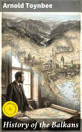
The Balkans
Arnold Toynbee
Nov 2023 · DigiCat
Ebook
270
Pages
family_home
Eligible
info
About this ebook
In "The Balkans," Arnold Toynbee presents a comprehensive examination of the intricate historical, cultural, and political landscape of the Balkan region. Written in his characteristic analytical style, the book delves into the societal transformations and the interplay of civilizations that have shaped the Balkans over centuries. Toynbee weaves a narrative that contextualizes the area's conflicts and alliances within the broader framework of European history, demonstrating how its unique geopolitical position has made it a crucible of ethnic identities and cultural legacies. Arnold Toynbee, a prominent British historian and philosopher, is renowned for his profound insights into the dynamics of civilizations. His academic background and extensive travels in Europe, coupled with the tumultuous events of the early 20th century, profoundly influenced his perspective on the Balkans. Toynbee's commitment to exploring the causes of wars and the possibility of peace is evident in this work, reflecting his lifelong dedication to understanding the complexities of human societies. This book is essential for readers seeking to comprehend the historical forces that have shaped the Balkans. Scholars, students, and general readers alike will find Toynbee's synthesis of historical narratives both enlightening and thought-provoking, as it offers vital lessons on the interplay of culture and conflict that remain relevant today.
In "The Balkans," Arnold Toynbee presents a comprehensive examination of the intricate historical, cultural, and political landscape of the Balkan region. Written in his characteristic analytical style, the book delves into the societal transformations and the interplay of civilizations that have...
Discover more
About the author
Arnold Joseph Toynbee (1889–1975) was a British historian, a philosopher of history, and a prolific writer whose scholarly work garnered considerable acclaim in the mid-20th century. Toynbee's academic legacy is largely defined by his monumental work 'A Study of History', a 12-volume analysis of the rise and fall of civilizations that has influenced generations of historians and intellectuals. His approach synthesized historical data across civilizations, examining societal challenges and responses as a cyclical pattern in human affairs. His interests were not limited to broad historical processes, as evident in his more focused analyses such as 'The Balkans: A History of Bulgaria, Serbia, Greece, Rumania, Turkey' (1922), which reflects Toynbee's capacity to explore regional dynamics within the grand sweep of history. Often characterized by a holistic view that interwove cultural, social, economic, and political threads, his works invited contemplation on the interconnectedness of human societies. However, Toynbee's methodology and philosophical assertions have sparked debates among scholars. Critics have underscored issues with his generalizations and deterministic view of history. Despite these critiques, Toynbee's influence extends beyond the discipline of history, contributing to philosophical and sociological discussions on the nature of civilizations and the course of human events. His legacy remains a testament to the breadth of intellectual inquiry and the enduring conversation on the patterns of history.
Arnold Joseph Toynbee (1889–1975) was a British historian, a philosopher of history, and a prolific writer whose scholarly work garnered considerable acclaim in the mid-20th century. Toynbee's academic legacy is largely defined by his monumental work 'A Study of History', a 12-volume analysis of ...
Rate this ebook
Tell us what you think.
Reading information
Smartphones and tablets
Install the Google Play Books app for Android and iPad/iPhone. It syncs automatically with your account and allows you to read online or offline wherever you are.
Laptops and computers
You can listen to audiobooks purchased on Google Play using your computer's web browser.
eReaders and other devices
To read on e-ink devices like Kobo eReaders, you'll need to download a file and transfer it to your device. Follow the detailed Help Center instructions to transfer the files to supported eReaders.