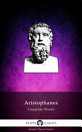
The Frogs
Jan 2021 · Otbebookpublishing
Ebook
47
Pages
family_home
Eligible
info
About this ebook
The Frogs is a comedy written by the Ancient Greek playwright Aristophanes. It was performed at the Lenaia, one of the Festivals of Dionysus in Athens, in 405 BC and received first place. The Frogs tells the story of the god Dionysus, who, despairing of the state of Athens' tragedians, travels to Hades (the underworld) to bring the playwright Euripides back from the dead. (Euripides had died the year before, in 406 BC.) He brings along his slave Xanthias, who is smarter and braver than Dionysus. As the play opens, Xanthias and Dionysus argue over what kind of jokes Xanthias can use to open the play. For the first half of the play, Dionysus routinely makes critical errors, forcing Xanthias to improvise in order to protect his master and prevent Dionysus from looking incompetent—but this only allows Dionysus to continue to make mistakes with no consequence.
The Frogs is a comedy written by the Ancient Greek playwright Aristophanes. It was performed at the Lenaia, one of the Festivals of Dionysus in Athens, in 405 BC and received first place. The Frogs tells the story of the god Dionysus, who, despairing of the state of Athens' tragedians, travels to...
Discover more
About the author
Aristophanes, often hailed as the Father of Comedy, was a seminal figure in ancient Greek literature, whose works have transcended millennia to influence comedic writing even today. Born around 446 BCE in Athens, Aristophanes lived through the tumultuous period of the Peloponnesian War, which profoundly shaped his satirical and often politically charged plays. His sharp wit and keen observations made him a formidable critic of Athenian society, politics, and culture.Aristophanes' plays, such as "The Clouds," "Lysistrata," and "The Frogs," are celebrated for their clever use of satire, parody, and farce. His fearless critique of prominent figures, including the philosopher Socrates and the politician Cleon, often courted controversy, earning him both acclaim and animosity. Despite facing legal challenges and public backlash, Aristophanes remained undeterred, using humor as a powerful tool to question authority and provoke thought.His influence extends beyond the realm of ancient Greek theater; modern playwrights and comedians draw inspiration from his pioneering work in blending humor with social commentary. Aristophanes championed revolutionary ideas about peace, gender roles, and the absurdity of war, themes that resonate deeply with contemporary audiences.Intriguingly, Aristophanes' legacy is not just confined to his literary genius but also to his audacity in using the stage as a platform for political dissent and societal reflection. His enduring relevance underscores the timeless nature of his insights and the universal appeal of his comedic brilliance.
Aristophanes, often hailed as the Father of Comedy, was a seminal figure in ancient Greek literature, whose works have transcended millennia to influence comedic writing even today. Born around 446 BCE in Athens, Aristophanes lived through the tumultuous period of the Peloponnesian War, which pro...
Rate this ebook
Tell us what you think.
Reading information
Smartphones and tablets
Install the Google Play Books app for Android and iPad/iPhone. It syncs automatically with your account and allows you to read online or offline wherever you are.
Laptops and computers
You can listen to audiobooks purchased on Google Play using your computer's web browser.
eReaders and other devices
To read on e-ink devices like Kobo eReaders, you'll need to download a file and transfer it to your device. Follow the detailed Help Center instructions to transfer the files to supported eReaders.