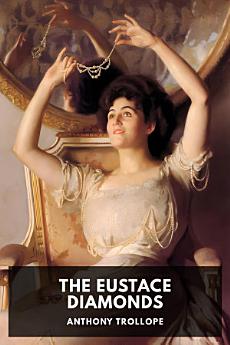
The Eustace Diamonds
About this ebook
But just as Lizzie sought a life of ease by marrying money, so too there are those who see in Lady Eustace their opportunity to acquire riches along with the beautiful widow herself. Given the relentless, even fierce, legal forces she faces regarding the diamonds, Lizzie is also alert to the benefit she would enjoy from having a husband to support her. But which is it to be? The tedious Lord Fawn, who would bring a title? Her cousin and confidant, Frank Greystock, who is a member of Parliament but saddled with debt? Or the debonair but dubious Lord George de Bruce Carruthers? Or perhaps none of them!
Lizzie’s life of lies and calculation has echoes and mirrors in the novel’s subplots. She falls in with an unsavory and scheming set which includes a desperately ill-suited couple being driven towards a potentially disastrous marriage. Meanwhile, the love life of her childhood friend, the plain, poor, and pure Lucy Morris, seems to be the antithesis to Lizzie’s own.
Anthony Trollope felt real ambivalence about the growing interest in mystery novels, whose popularity was burgeoning as he sat down to write The Eustace Diamonds. Wilkie Collins’s The Moonstone had just been published to huge success, giving birth to the detective novel genre. Trollope would have none of it, and kept no secrets from his readers. That The Eustace Diamonds maintains a sense of drama and intrigue in spite of Trollope’s forthright narration is a testament to his skill as a storyteller.
There are also signs of Trollope plotting a future course for his Palliser series, of which The Eustace Diamonds is the third. Political life is not absent, but it is wholly subservient to the events that swirl around Lizzie and her companions. As the novel closes, Trollope winks at his readers, informing us that we haven’t seen the last of Lizzie Eustace yet.
This book is part of the Standard Ebooks project, which produces free public domain ebooks.