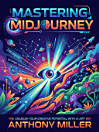
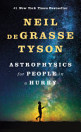
About this ebook
Discover more
About the author
About the Author
Anthony Miller has spent over two decades working at the intersection of human spaceflight operations, aerospace engineering, and survival training. He began his career as a spacecraft systems engineer at NASA's Johnson Space Center, where he supported the International Space Station Program's environmental control and life support system team for seven years. During that time, he authored over a dozen operational procedures for emergency response, contributed to the redesign of the station's carbon dioxide removal assembly, and served as a lead instructor for the Space Station Training Facility's integrated simulations.
In 2014, Miller transitioned to the private sector, joining SpaceX as a crew operations engineer during the early development of the Crew Dragon program. He was directly involved in the design and certification of the vehicle's emergency escape system, including the SuperDraco abort engine sequence and the crew emergency oxygen supply architecture. He served as a training lead for the Demo-2 and Crew-1 missions, where he developed the emergency procedure training curriculum that was later adopted as a baseline for all commercial crew operations. His work on crew survival during launch abort scenarios earned him the company's Engineering Excellence Award in 2017.
Miller left SpaceX in 2020 to found Orbital Safety Associates, a consulting firm specializing in deep space mission safety, crew training, and survival system design. His firm has worked with NASA's Artemis program, Axiom Space, Blue Origin, and multiple international space agencies to develop hazard analysis frameworks, emergency response protocols, and crew certification standards for missions beyond low Earth orbit. He has personally trained over forty astronauts and mission specialists in deep space survival procedures, including EVA emergency response, contingency medical operations, and vessel abandonment protocols.
He holds a Bachelor of Science in Aerospace Engineering from the Georgia Institute of Technology and a Master of Engineering in Space Systems from the University of Texas at Austin. He is a certified private pilot, a PADI master scuba diver instructor, and a Wilderness Emergency Medical Technician. These seemingly unrelated certifications share a common thread: training people to make good decisions in environments where the consequences of error are immediate and severe.
Miller is a frequent keynote speaker at the International Astronautical Congress, the Space Safety Conference, and the Human Factors and Ergonomics Society annual meeting. He has published papers on crew decision-making under time pressure, the normalization of deviance in spacecraft operations, and the training requirements for deep space medical emergencies. His perspective is shaped not just by engineering analysis but by the practical reality of strapping human beings into machines and sending them beyond the safety of Earth's atmosphere. He lives in Houston, Texas, where he continues to consult on deep space safety programs and maintains a small fleet of racing sailboats that he uses to teach decision-making under risk to young engineers entering the space industry.