About this ebook
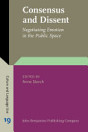
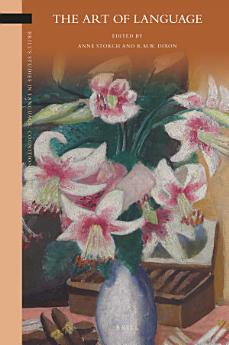
This book contributes to opening up disciplinary knowledge and offering connections between different approaches to language in contemporary linguistics. Rather than focusing on a particular single methodology or theoretical assumption, the volume presents part of the wealth of linguistic knowledge as an intertwined project, which combines numerous practices, positionalities and perspectives. The editors believe ̧ together with the contributors to this volume ̧ that it is a crucial and timely task to emphasize the relevance of linguistic knowledge on power, hospitality, social class, marginalization, mobility, history, secrecy, the structures of discourse, and the construction of meaning, as knowledge that needs to be brought together – as it is brought together in personal discussions, conversations and encounters. To work along traces of linguistic connectivity, marginalized narratives, in and on lesser studied (often stigmatized) language practices and to shed light on the tasks of linguistics in making diverse knowledges transparent—this offers spaces for critical discussion on the ethics of linguistics, its challenges, contributions and tasks. These are the approaches that are characteristic for the work of Alexandra Y. Aikhenvald, to whom this book is dedicated.
This book contributes to opening up disciplinary knowledge and offering connections between different approaches to language in contemporary linguistics. Rather than focusing on a particular single methodology or theoretical assumption, the volume presents part of the wealth of linguistic knowled...
About the author
Anne Storch is a Professor of African Linguistics at the University of Cologne. Her principal research has been on the various languages of Nigeria (including Jukun and Maaka), on the Atlantic language region, on Western Nilotic (Southern Sudan and Uganda), with a current interest in Digo (Kenya). Her work combines contributions on cultural and social contexts of languages, the semiotics of linguistic practices, epistemes and ontologies of colonial linguistics, as well as linguistic description. She has contributed to the analysis of registers and choices, language as social practice, ways of speaking and complex repertoires. She is interested in epistemic language, metalinguistics, noise and silence, as well as language use in complicated settings, such as tourism.
R. M. W. Dixon is Adjunct Professor at Central Queensland University in Cairns. For forty years he reveled in on-the-spot fieldwork in Brazil, South Pacific, and especially in Australia. He has also put out two general books on Australian languages. Being equally intrigued with his native language, he has published several books about English grammar. Bob Dixon also enjoys looking for inductive generalisations which reveal the nature of human language, resulting the three-volume Basic Linguistic Theory (2010, 2012), among other works. His enterprise extends outwards from these foci, to kinship systems, the poetry of songs, the nature of linguistic evolution. He has been inspired by the linguistic acumen, insight, and integrity of Alexandra Aikhenvald, with whom he has had a long and prosperous partnership, as recounted in his academic autobiography I am a Linguist (Brill 2011). He has recently published The Essence of Linguistic Analysis (Brill 2021).
R. M. W. Dixon is Adjunct Professor at Central Queensland University in Cairns. For forty years he reveled in on-the-spot fieldwork in Brazil, South Pacific, and especially in Australia. He has also put out two general books on Australian languages. Being equally intrigued with his native language, he has published several books about English grammar. Bob Dixon also enjoys looking for inductive generalisations which reveal the nature of human language, resulting the three-volume Basic Linguistic Theory (2010, 2012), among other works. His enterprise extends outwards from these foci, to kinship systems, the poetry of songs, the nature of linguistic evolution. He has been inspired by the linguistic acumen, insight, and integrity of Alexandra Aikhenvald, with whom he has had a long and prosperous partnership, as recounted in his academic autobiography I am a Linguist (Brill 2011). He has recently published The Essence of Linguistic Analysis (Brill 2021).
Anne Storch is a Professor of African Linguistics at the University of Cologne. Her principal research has been on the various languages of Nigeria (including Jukun and Maaka), on the Atlantic language region, on Western Nilotic (Southern Sudan and Uganda), with a current interest in Digo (Kenya)...
Rate this ebook
Tell us what you think.
Reading information
Smartphones and tablets
Install the Google Play Books app for Android and iPad/iPhone. It syncs automatically with your account and allows you to read online or offline wherever you are.
Laptops and computers
You can listen to audiobooks purchased on Google Play using your computer's web browser.
eReaders and other devices
To read on e-ink devices like Kobo eReaders, you'll need to download a file and transfer it to your device. Follow the detailed Help Center instructions to transfer the files to supported eReaders.