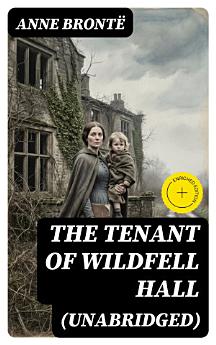
The Tenant of Wildfell Hall (Unabridged): Enriched edition. A Romance Novel
Anne Brontë
Dec 2023 · DigiCat
Ebook
437
Pages
family_home
Eligible
info
About this ebook
Anne Brontë's "The Tenant of Wildfell Hall" stands as a remarkable landmark in Victorian literature, notable for its bold exploration of gender roles, morality, and the effects of alcoholism on family dynamics. Through the eyes of Helen Graham, a mysterious woman who comes to reside in the titular Wildfell Hall, Brontë employs a penetrating narrative style infused with realism and psychological depth. The narrative challenges the era's conventions by openly critiquing the constraints placed on women, as well as the oppressive nature of patriarchal society, presenting a powerful commentary on the struggle for autonomy and self-determination. Anne Brontë, the youngest sibling of the famed Brontë sisters, drew upon her own experiences and observations of societal norms to craft this novel. Having witnessed the tumultuous circumstances of women in her society, including the impact of addiction on familial relationships, Brontë's life experiences informed her portrayal of Helen Graham's plight. Her perspective as a governess and her affinity for social justice and reform further shaped her writing, making her voice both distinctive and impactful amidst literary contemporaries. This unabridged edition is highly recommended for its pioneering insights into women's rights and personal agency. Readers seeking a profound and thought-provoking narrative will find "The Tenant of Wildfell Hall" not only a compelling page-turner but also an essential text for understanding the complexities of gender and societal expectations in the 19th century. In this enriched edition, we have carefully created added value for your reading experience: - A succinct Introduction situates the work's timeless appeal and themes. - The Synopsis outlines the central plot, highlighting key developments without spoiling critical twists. - A detailed Historical Context immerses you in the era's events and influences that shaped the writing. - An Author Biography reveals milestones in the author's life, illuminating the personal insights behind the text. - A thorough Analysis dissects symbols, motifs, and character arcs to unearth underlying meanings. - Reflection questions prompt you to engage personally with the work's messages, connecting them to modern life. - Hand‐picked Memorable Quotes shine a spotlight on moments of literary brilliance. - Interactive footnotes clarify unusual references, historical allusions, and archaic phrases for an effortless, more informed read.
Anne Brontë's "The Tenant of Wildfell Hall" stands as a remarkable landmark in Victorian literature, notable for its bold exploration of gender roles, morality, and the effects of alcoholism on family dynamics. Through the eyes of Helen Graham, a mysterious woman who comes to reside in the titula...
Discover more
About the author
Anne Brontë (1820-1849) was a nineteenth-century English novelist and poet, the youngest member of the literary Brontë family. Born in Thornton, West Yorkshire, Anne grew up in the village of Haworth, where her father, Patrick Brontë, served as a curate. Influenced by her surroundings and the rich imaginative worlds that she and her siblings created during their childhood, Anne developed a profound literary sensibility. Educated largely at home, she also spent time at a boarding school, which later influenced her critical portrayal of such institutions in her work. Her most celebrated novel, 'The Tenant of Wildfell Hall' (Unabridged), published in 1848 under the pseudonym Acton Bell, is considered one of the first feminist novels. It starkly depicted issues like alcoholism and women's rights, particularly in the context of marriage and moral autonomy. The novel's realistic narrative and strong characterizations were groundbreaking, offering an assertive female protagonist in a time when social norms favored passive female roles. Her literary style was marked by a candid treatment of societal issues, an unflinching realism, and an insistence on moral integrity and personal accountability. Though Anne's life was cut short by tuberculosis at the age of 29, her work continues to be celebrated for its courage, innovative perspectives, and deep human insights. Anne Brontë remains a significant, though often underrated, figure in English literature, casting a discerning light on the social dynamics of her time.
Anne Brontë (1820-1849) was a nineteenth-century English novelist and poet, the youngest member of the literary Brontë family. Born in Thornton, West Yorkshire, Anne grew up in the village of Haworth, where her father, Patrick Brontë, served as a curate. Influenced by her surroundings and the ric...
Rate this ebook
Tell us what you think.
Reading information
Smartphones and tablets
Install the Google Play Books app for Android and iPad/iPhone. It syncs automatically with your account and allows you to read online or offline wherever you are.
Laptops and computers
You can listen to audiobooks purchased on Google Play using your computer's web browser.
eReaders and other devices
To read on e-ink devices like Kobo eReaders, you'll need to download a file and transfer it to your device. Follow the detailed Help Center instructions to transfer the files to supported eReaders.