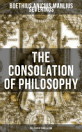
The Consolation of Philosophy (translated by H. R. James M.A.): Enriched edition.
Anicius Manlius Severinus Boethius
May 2022 · DigiCat
Ebook
250
Pages
family_home
Eligible
info
About this ebook
In "The Consolation of Philosophy," originally penned by Anicius Manlius Severinus Boethius in the early 6th century, the author merges philosophy with a poetic narrative style, reflecting the tensions of a world in crisis. Written while Boethius was imprisoned and awaiting execution, this text marvelously explores themes of fortune, happiness, and the transient nature of worldly power. Boethius employs a dialogue between himself and Lady Philosophy, who serves as his guide through an array of philosophical inquiries, ultimately asserting that true happiness lies in the pursuit of virtue rather than material wealth. Boethius, a Roman philosopher, statesman, and Christian thinker, drew upon a rich intellectual heritage, intertwining Platonic and Aristotelian elements with Christian ethos. His position in the tumultuous political landscape of the late Roman Empire, coupled with his personal misfortunes, deeply informed the poignant reflections found in this work. Boethius's unique ability to articulate his despair and his quest for understanding resonates profoundly in both philosophical and theological discourse. "The Consolation of Philosophy" is an essential read for anyone seeking insight into the human condition, offering timeless wisdom that remains relevant in contemporary discussions of ethics and happiness. Its fusion of prose and verse invites readers to ponder life's most pressing questions, making it a remarkable companion for both casual readers and serious scholars alike. In this enriched edition, we have carefully created added value for your reading experience: - A succinct Introduction situates the work's timeless appeal and themes. - The Synopsis outlines the central plot, highlighting key developments without spoiling critical twists. - A detailed Historical Context immerses you in the era's events and influences that shaped the writing. - An Author Biography reveals milestones in the author's life, illuminating the personal insights behind the text. - A thorough Analysis dissects symbols, motifs, and character arcs to unearth underlying meanings. - Reflection questions prompt you to engage personally with the work's messages, connecting them to modern life. - Hand‐picked Memorable Quotes shine a spotlight on moments of literary brilliance. - Interactive footnotes clarify unusual references, historical allusions, and archaic phrases for an effortless, more informed read.
In "The Consolation of Philosophy," originally penned by Anicius Manlius Severinus Boethius in the early 6th century, the author merges philosophy with a poetic narrative style, reflecting the tensions of a world in crisis. Written while Boethius was imprisoned and awaiting execution, this text m...
About the author
Anicius Manlius Severinus Boethius, commonly known as Boethius (c. 477-524 AD), was a Roman philosopher, statesman, and one of the early scholars of the Middle Ages. His intellectual prowess and scholarly works bridged the gap between the classical philosophy of ancient Greece and Rome and the emergent scholasticism of medieval Europe. Boethius was born into an aristocratic Roman family and received a comprehensive education, mastering the knowledge of his predecessors, including Plato, Aristotle, and the writings of the Stoics. His most famous work, 'The Consolation of Philosophy' (translated by H. R. James M.A.), is a profound reflection on fate and divine providence, written during his imprisonment awaiting execution. This masterpiece is not merely a treatise; it is a dialogue between Boethius himself and Lady Philosophy, who offers him solace amidst his suffering. 'The Consolation of Philosophy' melds Neoplatonic thought with Christian theology and has been a seminal work in the philosophical canon, with notable influence on renowned figures such as Thomas Aquinas, Dante Alighieri, and Geoffrey Chaucer. Boethius is also renowned for his contributions to the Quadrivium—his translations and commentaries on logic, music, arithmetic, and astronomy laid foundational stones for medieval education. Embodying the literary grace and intellectual clarity of the late Roman era, Boethius remains a towering figure whose writings connect ancient wisdom with medieval and modern philosophy.
Anicius Manlius Severinus Boethius, commonly known as Boethius (c. 477-524 AD), was a Roman philosopher, statesman, and one of the early scholars of the Middle Ages. His intellectual prowess and scholarly works bridged the gap between the classical philosophy of ancient Greece and Rome and the em...
Rate this ebook
Tell us what you think.
Reading information
Smartphones and tablets
Install the Google Play Books app for Android and iPad/iPhone. It syncs automatically with your account and allows you to read online or offline wherever you are.
Laptops and computers
You can listen to audiobooks purchased on Google Play using your computer's web browser.
eReaders and other devices
To read on e-ink devices like Kobo eReaders, you'll need to download a file and transfer it to your device. Follow the detailed Help Center instructions to transfer the files to supported eReaders.