About this ebook
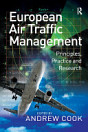
Complexity Science in Air Traffic Management is written particularly, but not exclusively, for transport researchers, though it also has a complementary appeal to practitioners, supported through the frequent references made to practical examples and operational themes such as performance, airline strategy, passenger mobility, delay propagation and free-flight safety. The book should also have significant appeal beyond the transport domain, due to its intrinsic value as an exposition of applied complexity science and applied research, drawing on examples of simulations and modelling throughout, with corresponding insights into the design of new concepts and policies, and the understanding of complex phenomena that are invisible to classical techniques.
Discover more
About the author
Andrew Cook is a Principal Research Fellow at the University of Westminster, where he manages the Department’s ATM research. He has been a research fellow of the University for over 20 years. Leader of ten projects for EUROCONTROL, Andrew is currently engaged in several projects in SESAR’s Workpackage E (long-term and innovative research), in addition to air transport industry and EU framework research coordination. Other responsibilities include serving on the programme committee for the annual SESAR innovation conferences and on the Editorial Board of the Journal of Aerospace Operations. Andrew has published widely in ATM, across a number of domains, and frequently reviews journal submissions for Elsevier. He was editor of the first book on European ATM, published by Ashgate. Andrew holds a BA (Hons) Natural Sciences, with supplementary Distinction, and a DPhil Physiological Sciences, both from the University of Oxford.
Damián Rivas received his first degree in Aeronautical Engineering from the Polytechnic University of Madrid and has a PhD from Case Western Reserve University (Cleveland, Ohio). He is currently Professor in the Department of Aerospace Engineering of the Universidad de Sevilla, teaching flight mechanics and air navigation; Director of the Group of Aerospace Engineering of the University of Seville; scientific coordinator of the SESAR WP-E Complex-World Network; and a member of the programme committee of the annual SESAR Innovation Days conferences. His main research interests are aircraft trajectory optimisation, aircraft conflict detection and resolution, and uncertainty propagation in air traffic management.