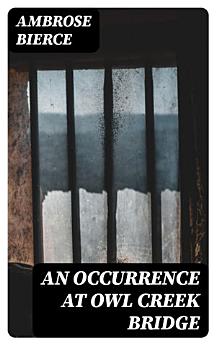
An Occurrence at Owl Creek Bridge
Ambrose Bierce
Sep 2022 · DigiCat
Ebook
107
Pages
family_home
Eligible
info
About this ebook
Ambrose Bierce's "An Occurrence at Owl Creek Bridge" is a masterful short story that delves into the psychological and emotional turmoil of a man facing his execution during the American Civil War. Utilized as a poignant exploration of time, perception, and the intersection of reality and illusion, Bierce's narrative employs a strikingly detached style characterized by vivid imagery and sharp, succinct prose. Set against the backdrop of war, the story encapsulates themes of hope, despair, and the ethereal nature of life and death, revealing the complexity of human consciousness in the face of mortality. Bierce, a seasoned journalist and war veteran, draws from his own experiences in the Civil War to fuel the emotional weight of this narrative. His acute observations of human behavior, conflict, and the futility of war inform his storytelling, allowing readers to perceive the psychological depths of fear and longing. Ambrose Bierce's backgrounds as a soldier and writer culminate in a work that not only critiques war but also explores existential themes that resonate deeply within the human experience. I highly recommend "An Occurrence at Owl Creek Bridge" to readers who appreciate intricate narratives that challenge their perceptions of time and reality. This captivating tale invites deep reflection on the nature of existence and the delicate boundary between illusion and reality, making it an essential read for those interested in masterful storytelling infused with philosophical underpinnings.
Ambrose Bierce's "An Occurrence at Owl Creek Bridge" is a masterful short story that delves into the psychological and emotional turmoil of a man facing his execution during the American Civil War. Utilized as a poignant exploration of time, perception, and the intersection of reality and illusio...
Discover more
About the author
Ambrose Bierce, born Ambrose Gwinnett Bierce on June 24, 1842, in Meigs County, Ohio, emerged as one of the most prominent and enigmatic figures in American literature during the late 19th and early 20th centuries. His military experiences during the Civil War heavily influenced his writing, infusing his work with psychological depth and a somber realism. Bierce's narrative style is characterized by his sardonic wit and a penchant for the macabre, often categorized within the genres of horror and satire. Among his most notable works is the short story 'An Occurrence at Owl Creek Bridge' which is renowned for its unexpected plot twist and exploration of the theme of death and illusion. The story has been extensively studied and hailed as a supreme example of American naturalism and modernist narrative techniques. His most famous collection, 'Tales of Soldiers and Civilians,' solidified his reputation as a master of the short story form. Bierce's mysterious disappearance in Mexico in 1914 only enhanced his legend. Today, he is remembered not only for his haunting narratives but also for his influential 'The Devil's Dictionary,' highlighting his distinctive blend of cynical humor and keen social commentary. His literary contributions continue to fascinate scholars and readers, offering insight into the human condition and the American literary landscape during a transformative era.
Ambrose Bierce, born Ambrose Gwinnett Bierce on June 24, 1842, in Meigs County, Ohio, emerged as one of the most prominent and enigmatic figures in American literature during the late 19th and early 20th centuries. His military experiences during the Civil War heavily influenced his writing, infu...
Rate this ebook
Tell us what you think.
Reading information
Smartphones and tablets
Install the Google Play Books app for Android and iPad/iPhone. It syncs automatically with your account and allows you to read online or offline wherever you are.
Laptops and computers
You can listen to audiobooks purchased on Google Play using your computer's web browser.
eReaders and other devices
To read on e-ink devices like Kobo eReaders, you'll need to download a file and transfer it to your device. Follow the detailed Help Center instructions to transfer the files to supported eReaders.