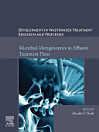
Decarbonization of Wastewater Pollutants as a Sustainable Solution: Developments in Wastewater Treatment Research and Processes

· ·
· Elsevier
Ebook
300
Pages
Eligible

About this ebook

Decarbonization of Wastewater Pollutants as a Sustainable Solution: Developments in Wastewater Treatment Research and Processes explores eco-friendly techniques for treating wastewater, enabling the recycling of pollutants and managing residual wastes in a biologically acceptable manner. The book addresses current and emerging technologies for wastewater treatment and reuse, discussing their limitations and future potential. It examines the transformation of anthropogenic waste into value-added products, emphasizing the critical need to handle waste more sustainably to mitigate hazards to humans, animals, and the environment.It delves into organic waste and fourth-generation biomass for targeted goods and provides insights into achieving full decarbonization by balancing residual emissions, including the carbon footprint of chemical use and transportation. The book covers technologies relevant to wastewater from municipal and industrial sources, as well as drinking water, and details physical, chemical, and thermal processes, making it indispensable for researchers in the field. - Describes the most recent, advanced industrial wastewater treatment technologies - Provides a comparative analysis of available wastewater treatment technologies - Highlights and examines the development of future technologies for removing anthropogenic contaminants from wastewater
Decarbonization of Wastewater Pollutants as a Sustainable Solution: Developments in Wastewater Treatment Research and Processes explores eco-friendly techniques for treating wastewater, enabling the recycling of pollutants and managing residual wastes in a biologically acceptable manner. The book...

Discover more

About the author

Dr Alok Prasad Das is Associate Professor, in the School of Biotechnology at Jawaharlal Nehru University, New Delhi, India. His research focuses on bioleaching technologies for metal recovery and waste management, microbial biogeochemical cycling of manganese, and advanced mineral processing with an emphasis on microbial resource recycling for sustainable development. More recently, his work has expanded into geomicrobiology and marine microplastic pollution, including microbial biodegradation of microplastics and characterization of marine sediment contamination. With over 15 years of research experience, Dr. Das has authored more than 150 peer-reviewed publications and has been supported by multiple funded projects.

Sunanda Mishra is a PhD research scholar. She has 5 years of research experience and published several Books, Journal Articles, and Editorial member of several reputed journals. Currently her major work involves Heavy metal pollution, Environmental Biotechnology, and Environmental Microplastic and Microfiber Pollution and management, Sustainability.

Maulin P. Shah is a distinguished environmental scientist, academician, and globally recognized expert in the fields of environmental biotechnology and sustainablewastewater treatment. He has made significant contributions to advancing eco-friendlytechnologies for pollution control, particularly through innovative biological treatment processes. He holds extensive academic and research experience, with a strong focus on industrial wastewater treatment, bioremediation, and microalgae-based technologies. His work emphasizes the integration of sustainability principles with practical engineering solutions, helping industries reduce their environmental footprint.His books cover a wide spectrum of cutting-edge domains, including industrial wastewater microbiology, bioremediation, biodegradation, algal biotechnology, biofuel, bioenergy, circular economy, metagenomics related to wastewater treatment, and enzyme engineering.

Dr Alok Prasad Das is Associate Professor, in the School of Biotechnology at Jawaharlal Nehru University, New Delhi, India. His research focuses on bioleaching technologies for metal recovery and waste management, microbial biogeochemical cycling of manganese, and advanced mineral processing with...

Rate this ebook

Tell us what you think.

Reading information

Smartphones and tablets
Install the Google Play Books app for Android and iPad/iPhone. It syncs automatically with your account and allows you to read online or offline wherever you are.
Laptops and computers
You can listen to audiobooks purchased on Google Play using your computer's web browser.
eReaders and other devices
To read on e-ink devices like Kobo eReaders, you'll need to download a file and transfer it to your device. Follow the detailed Help Center instructions to transfer the files to supported eReaders.