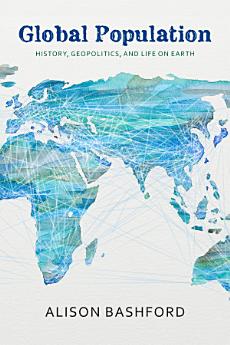
Global Population: History, Geopolitics, and Life on Earth
Jan 2014 · Columbia University Press
Ebook
480
Pages
Tools
info
family_home
Eligible
info
About this ebook
Concern about the size of the world's population did not begin with the "population bomb" in 1968. It arose in the aftermath of World War I and was understood as an issue with far-reaching ecological, agricultural, economic, and geopolitical consequences. The world population problem concerned the fertility of soil as much as the fertility of women, always involving both "earth" and "life."
Global Population traces the idea of a world population problem as it evolved from the 1920s through the 1960s. The growth and distribution of the human population over the planet's surface came deeply to shape the characterization of "civilizations" with different standards of living. It forged the very ideas of development, demographically defined three worlds, and, for some, an aspirational "one world."
Drawing on international conference transcripts and personal and organizational archives, this book reconstructs the twentieth-century population problem in terms of migration, colonial expansion, globalization, and world food plans. Population was a problem in which international relations and intimate relations were one. Global Population ultimately shows how a geopolitical problem about sovereignty over land morphed into a biopolitical solution, entailing sovereignty over one's person.
Global Population traces the idea of a world population problem as it evolved from the 1920s through the 1960s. The growth and distribution of the human population over the planet's surface came deeply to shape the characterization of "civilizations" with different standards of living. It forged the very ideas of development, demographically defined three worlds, and, for some, an aspirational "one world."
Drawing on international conference transcripts and personal and organizational archives, this book reconstructs the twentieth-century population problem in terms of migration, colonial expansion, globalization, and world food plans. Population was a problem in which international relations and intimate relations were one. Global Population ultimately shows how a geopolitical problem about sovereignty over land morphed into a biopolitical solution, entailing sovereignty over one's person.
Concern about the size of the world's population did not begin with the "population bomb" in 1968. It arose in the aftermath of World War I and was understood as an issue with far-reaching ecological, agricultural, economic, and geopolitical consequences. The world population problem concerned th...
Discover more
About the author
Alison Bashford is a historian whose many books connect imperial and world history with medical and environmental histories. She is the Vere Harmsworth Professor of Imperial and Naval History, University of Cambridge, and has taught at Harvard University, the Australian National University, and, for many years, at the University of Sydney. In 2011, she won the Cantemir Prize with Philippa Levine for The Oxford Handbook of the History of Eugenics.
Alison Bashford is a historian whose many books connect imperial and world history with medical and environmental histories. She is the Vere Harmsworth Professor of Imperial and Naval History, University of Cambridge, and has taught at Harvard University, the Australian National University, and, ...
Rate this ebook
Tell us what you think.
Reading information
Smartphones and tablets
Install the Google Play Books app for Android and iPad/iPhone. It syncs automatically with your account and allows you to read online or offline wherever you are.
Laptops and computers
You can listen to audiobooks purchased on Google Play using your computer's web browser.
eReaders and other devices
To read on e-ink devices like Kobo eReaders, you'll need to download a file and transfer it to your device. Follow the detailed Help Center instructions to transfer the files to supported eReaders.