About this ebook
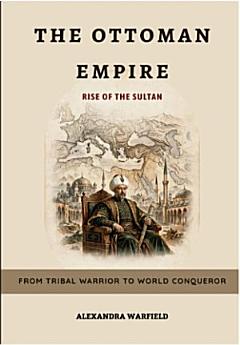
In September 1520, twenty-five-year-old Suleiman ascended the Ottoman throne, inheriting a state stretching from the Persian Gulf to the Danube. Over his forty-six-year reign, he would bring Vienna to its knees. Known as the Lawgiver to his own people and the Magnificent to Europe, Suleiman inherited an empire built by predecessors: Ertuğrul, who held a frontier position in Anatolia; Osman, founder of the dynasty; Murad I, who extended Ottoman rule into Europe before dying at Kosovo in 1389; Mehmed II, whose forces took Constantinople in 1453; and Selim I, who nearly doubled the empire's territory between 1512 and 1520.
The narrative traces this two-century arc: Ertuğrul's frontier campaigns in the 1260s, Osman's early conquests, the crossing into Europe, the devshirme and janissary systems, and the 1402 defeat at Ankara, where Timur captured Bayezid I. It covers the 1453 siege of Constantinople and Mehmed II's assumption of the title Caesar of Rome; Selim I's victories at Chaldiran (1514) and Marj Dabiq (1516), which brought Egypt, Syria, and the holy cities under Ottoman control, along with his assumption of the caliphate; and Suleiman's own reign — the 1529 siege of Vienna, naval power at Preveza in 1538, his legal codification, and Sinan's architectural work.