Transcendentalism: The American Philosophy of Self-Reliance and the Divinity of Nature, from Emerson and Thoreau to Margaret Fuller, and Its Vision of Intuition and the Over-Soul
About this ebook
What if the ultimate truth of your existence is not found in books, institutions, or social expectations—but waiting inside your own soul?
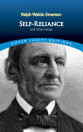
In the autumn of 1832, a young Boston minister named Ralph Waldo Emerson resigned his pulpit, refusing to perform a ritual that had crystallized into empty form. He set out to find a living reality—one that demanded encounter on its own terms.
What he and a small circle of brilliant rebels discovered would become Transcendentalism, the only native-born philosophical movement in American history.
In Transcendentalism: The American Philosophy of Self-Reliance and the Divinity of Nature, author Alex Omberg traces this extraordinary intellectual revolution from its origins to its modern-day legacy. From the quiet shores of Walden Pond to the fiery abolitionist pulpits of Boston, this book brings to life the men and women who dared to trust their own minds when the world demanded conformity.
Inside this comprehensive guide, you will discover:
The Battle Against the "Corpse-Cold" Faith: How a generation of young thinkers rebelled against sterile rationalism to reclaim immediate, firsthand spiritual experience.
The Giants of Transcendentalism: Intimate portraits of the movement's core figures—including Ralph Waldo Emerson, the prophet of individuality; Henry David Thoreau, the practitioner of deliberate living; and Margaret Fuller, the formidable feminist who demanded equal conditions for the soul.
The Core Philosophies Explained: Clear, accessible breakdowns of profound concepts like the Over-Soul, the distinction between intuitive Reason and analytical Understanding, and the belief that Nature is a living, symbolic language.
Heaven on a Few Acres: The fascinating, complex history of the utopian experiments of Brook Farm and Fruitlands—and the gendered, economic tensions that eventually tore them apart.
A Legacy That Shaped the World: How Thoreau’s night in a Concord jail directly inspired Mahatma Gandhi’s Satyagraha and Martin Luther King Jr.’s Civil Rights Movement, and how Transcendentalist reverence for the wild birthed modern environmentalism.
Why This Book Matters Now
We live in an era saturated with external noise, algorithms, and endless social performance. The Transcendentalist question is more urgent today than it was in the 1840s: How do you maintain your inner integrity when society demands complete compliance?
This book is not a historical curiosity. It is a roadmap for the modern seeker. It is a call to awaken, to step into the woods, to look past the empty garments of custom, and to hear the "iron string" vibrating in your own heart.
Whether you are a student of history, a lover of philosophy, or a modern seeker searching for depth in a shallow world, this volume serves as a rich companion to your intellectual journey.