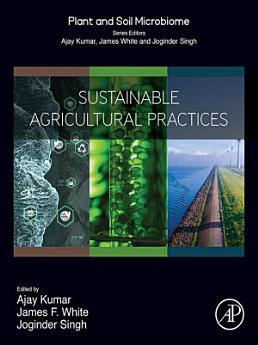
Sustainable Agricultural Practices

· ·
· Elsevier
Ebook
430
Pages
Eligible

About this ebook

The need for sustainable advancement in agriculture practices continues to press. Achieving optimum yields of crops has traditionally meant farmers continuously using large amounts of chemical fertilizers or pesticides but the indiscriminate use of these pesticides has adversely affected the environment, non- target microorganisms, soil textures and human health. Sustainable Agricultural Practices, a volume in the Plant and Soil Microbiome series, presents foundational information into the successful utilization of different biocontrol agents (especially bacteria and fungi actinomycetes) under field conditions which can help relieve the pressure of overexploitation of synthetic pesticides in agriculture. As many of the microorganisms including nitrogen fixing bacteria and cyanobacteria can be used as bio inoculants, they offer opportunities to not only to enhance the crop productivity but also for maintaining the natural properties of agricultural soils. The volume explores the multifaceted benefits derived from varieties of microorganisms existing in different components of ecosystem, many of which could potentially be employed as probiotics for improved human and livestock health. Researchers seeking to expand their understanding of related fields, and students seeking foundational concept coverage will find this volume valuable. - Includes summaries, case studies, and applications to provide real-world insights - Provides accessible, informative illustrations of current trends in microbial biotechnology - Presents data through tables and figures for effective communication - Suggests future research avenues in the field of microbial biotechnology for sustainable development
The need for sustainable advancement in agriculture practices continues to press. Achieving optimum yields of crops has traditionally meant farmers continuously using large amounts of chemical fertilizers or pesticides but the indiscriminate use of these pesticides has adversely affected the envi...

Discover more

About the author

Ajay Kumar is currently an Assistant Professor at the Amity Institute of Biotechnology, Amity University, Noida, India. He previously served as a Visiting Scientist at the Agricultural Research Organization, Volcani Center, Israel (2018–2022), and completed his doctoral research at the Department of Botany, Institute of Science, Banaras Hindu University, Varanasi, India, focusing on plant–microbe interactions. Dr. Kumar’s research expertise spans plant–microbe interactions, microbial biocontrol, postharvest fruit disease management, microbial endophytes of medicinal plants, and cyanobacteria–pesticide interactions. He is a prolific author in leading international journals and is also actively engaged in academic editing with major publishers such as Elsevier, Springer, CRC Press, and Wiley. Dr. Kumar currently serves as an Associate Editor for Frontiers in Microbiology and BMC Microbiology, a Guest Editor for Microorganisms and Plants (MDPI), and a Series Editor for Plant and Soil Microbiome (Elsevier).

James F. White is professor of Plant Biology at Rutgers University, New Brunswick, NJ, United States. He received his BS and MS degrees in Botany and Plant Pathology/Mycology from Auburn University, Alabama, and completed his PhD in Botany at the University of Texas at Austin in 1987. Dr. White is internationally recognized for his research on symbiosis, with a focus on endophytic microorganisms. He has authored numerous scientific articles and has written or edited several influential reference books on the biology, taxonomy, and phylogeny of microbial endophytes. He and his research group currently investigate the diversity of endophytic and biostimulant microbes and their functional impacts on host plants, contributing foundational knowledge to plant–microbe interaction biology and sustainable agricultural innovation.

Dr. Joginder Singh is a Professor in the Department of Botany at Nagaland University, Lumami, India. His previous positions include a professorship at Lovely Professional University's School of Bioengineering and Biosciences and a Young Scientist role at Jai Narain Vyas University's Microbial Biotechnology and Biofertilizer Laboratory (funded by the Department of Science and Technology, Government of India). He is a member of several scientific societies, including the Association of Microbiologists of India and the European Federation of Biotechnology. Dr. Singh has an extensive publication record, with over 250 research and review articles, 35 edited books (with publishers like Elsevier and Springer), and 125 book chapters. He is a reviewer for numerous prestigious journals. He has actively participated in and presented at numerous national and international scientific events.
Ajay Kumar is currently an Assistant Professor at the Amity Institute of Biotechnology, Amity University, Noida, India. He previously served as a Visiting Scientist at the Agricultural Research Organization, Volcani Center, Israel (2018–2022), and completed his doctoral research at the Department...

Rate this ebook

Tell us what you think.

Reading information

Smartphones and tablets
Install the Google Play Books app for Android and iPad/iPhone. It syncs automatically with your account and allows you to read online or offline wherever you are.
Laptops and computers
You can listen to audiobooks purchased on Google Play using your computer's web browser.
eReaders and other devices
To read on e-ink devices like Kobo eReaders, you'll need to download a file and transfer it to your device. Follow the detailed Help Center instructions to transfer the files to supported eReaders.