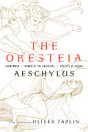
The Oresteia
Mar 2019 · University of Chicago Press
Ebook
257
Pages
Tools
info
family_home
Eligible
info
About this ebook
Highly acclaimed as translators of Greek and Sanskrit classics, respectively, David Grene and Wendy Doniger O'Flaherty here present a complete modern translation of the three plays comprising Aeschylus' Oresteia and, with the assistance of director Nicholas Rudall, an abridged stage adaptation. This balanced and highly successful collaboration of scholars with a theater director solves the contemporary problems of translating and staging the Oresteia, which originally was written to be performed in Athens in the first half of the fifth century B.C. While remaining faithful to the original Greek, Grene and O'Flaherty embrace a strong and adventurous English style, vivid and visceral. The language of this extraordinary translation, immediately accessible to a theater audience, speaks across the centuries. Premiered at Chicago's Court Theater in 1986 under Rudall's direction, the stage adaptation of the Oresteia proved eminently playable. This new adaptation of the Oresteia offers a brilliant demonstration of how clearly defined goals (here, the actor's needs) can inspire translators to produce fresh, genuine, accessible dramatic texts. The resulting work provides complete and accurate texts for those who cannot read the original Greek, and it transforms the Oresteia into an effective modern stage play. With interpretive introductions written by the translators and director, this new version will be welcomed by teachers of translation courses, by students of Greek and world drama in general, and by theater professionals.
Highly acclaimed as translators of Greek and Sanskrit classics, respectively, David Grene and Wendy Doniger O'Flaherty here present a complete modern translation of the three plays comprising Aeschylus' Oresteia and, with the assistance of director Nicholas Rudall, an abridged stage adaptation. T...
Discover more
About the author
Aeschylus was born at Eleusis of a noble family. He fought at the Battle of Marathon (490 b.c.), where a small Greek band heroically defeated the invading Persians. At the time of his death in Sicily, Athens was in its golden age. In all of his extant works, his intense love of Greece and Athens finds expression. Of the nearly 90 plays attributed to him, only 7 survive. These are The Persians (produced in 472 b.c.), Seven against Thebes (467 b.c.), The Oresteia (458 b.c.)---which includes Agamemnon, Libation Bearers, and Eumenides (or Furies) --- Suppliants (463 b.c.), and Prometheus Bound (c.460 b.c.). Six of the seven present mythological stories. The ornate language creates a mood of tragedy and reinforces the already stylized character of the Greek theater. Aeschylus called his prodigious output "dry scraps from Homer's banquet," because his plots and solemn language are derived from the epic poet. But a more accurate summation of Aeschylus would emphasize his grandeur of mind and spirit and the tragic dignity of his language. Because of his patriotism and belief in divine providence, there is a profound moral order to his plays. Characters such as Clytemnestra, Orestes, and Prometheus personify a great passion or principle. As individuals they conflict with divine will, but, ultimately, justice prevails. Aeschylus's introduction of the second actor made real theater possible, because the two could address each other and act several roles. His successors imitated his costumes, dances, spectacular effects, long descriptions, choral refrains, invocations, and dialogue. Swinburne's (see Vol. 1) enthusiasm for The Oresteia sums up all praises of Aeschylus; he called it simply "the greatest achievement of the human mind." Because of his great achievements, Aeschylus might be considered the "father of tragedy."
Aeschylus was born at Eleusis of a noble family. He fought at the Battle of Marathon (490 b.c.), where a small Greek band heroically defeated the invading Persians. At the time of his death in Sicily, Athens was in its golden age. In all of his extant works, his intense love of Greece and Athens ...
Rate this ebook
Tell us what you think.
Reading information
Smartphones and tablets
Install the Google Play Books app for Android and iPad/iPhone. It syncs automatically with your account and allows you to read online or offline wherever you are.
Laptops and computers
You can listen to audiobooks purchased on Google Play using your computer's web browser.
eReaders and other devices
To read on e-ink devices like Kobo eReaders, you'll need to download a file and transfer it to your device. Follow the detailed Help Center instructions to transfer the files to supported eReaders.