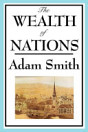
The Wealth of Nations (Summarized Edition): Enriched edition. Classical economics on division of labor, productivity, and free markets, challenging mercantilist and physiocratic doctrines of the era
Jan 2026 · Quickie Classics
Ebook
299
Pages
family_home
Eligible
info
About this ebook
First published in 1776, The Wealth of Nations advances a sweeping analysis of commercial society. Smith dissects the division of labor—famously, the pin factory—distinguishes natural from market prices, and traces capital, money, and trade. In lucid Enlightenment prose, he dismantles mercantilism, argues for freer commerce, and delineates limited public functions—defense, justice, infrastructure—founding classical political economy while grounding theory in historical examples and institutional detail. Adam Smith (1723–1790), Scotland's leading moral philosopher and Glasgow professor, carried into this work insights from The Theory of Moral Sentiments and a lifelong dialogue with David Hume. Travels in France while tutoring the Duke of Buccleuch brought him to the physiocrats, especially Quesnay and Turgot, sharpening his empirical method and his conviction that secure property and impartial justice foster prosperity. For readers of economic policy, intellectual history, or the ethics of markets, this book remains indispensable. It rewards careful study not as a brief for unbounded laissez-faire but as a nuanced blueprint that balances liberty with institutions. Students, policymakers, and reflective citizens will find lasting tools to think clearly about growth, taxation, trade, and the state. Quickie Classics summarizes timeless works with precision, preserving the author's voice and keeping the prose clear, fast, and readable—distilled, never diluted. Enriched Edition extras: Introduction · Synopsis · Historical Context · Author Biography · Brief Analysis · 4 Reflection Q&As · Editorial Footnotes.
First published in 1776, The Wealth of Nations advances a sweeping analysis of commercial society. Smith dissects the division of labor—famously, the pin factory—distinguishes natural from market prices, and traces capital, money, and trade. In lucid Enlightenment prose, he dismantles mercantilis...
Discover more
About the author
Adam Smith (1723-1790) was a Scottish economist, philosopher as well as a moral philosopher, a pioneer of political economy, and a key figure during the Scottish Enlightenment, also known as ''The Father of Economics'' or ''The Father of Capitalism''. Smith wrote two classic works, The Theory of Moral Sentiments and The Wealth of Nations, first modern works of economics. In his works, Adam Smith introduced his theory of absolute advantage.
Adam Smith (1723-1790) was a Scottish economist, philosopher as well as a moral philosopher, a pioneer of political economy, and a key figure during the Scottish Enlightenment, also known as ''The Father of Economics'' or ''The Father of Capitalism''. Smith wrote two classic works, The Theory of ...
Rate this ebook
Tell us what you think.
Reading information
Smartphones and tablets
Install the Google Play Books app for Android and iPad/iPhone. It syncs automatically with your account and allows you to read online or offline wherever you are.
Laptops and computers
You can listen to audiobooks purchased on Google Play using your computer's web browser.
eReaders and other devices
To read on e-ink devices like Kobo eReaders, you'll need to download a file and transfer it to your device. Follow the detailed Help Center instructions to transfer the files to supported eReaders.