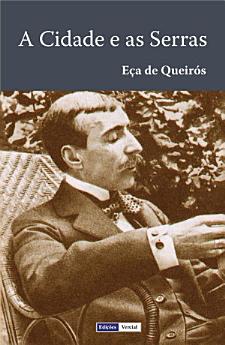
A Cidade e as Serras
Eça de Queirós
ม.ค. 2014 · Ediçoes Vercial
star
2 รีวิว
eBook
216
หน้า
เกี่ยวกับ eBook เล่มนี้
"O
meu amigo Jacinto nasceu num palácio, com cento e nove contos de renda
em terras de semeadura, de vinhedo, de cortiça e de olival.
No
Alentejo, pela Estremadura, através das duas Beiras, densas sebes
ondulando por colina e vale, muros altos de boa pedra, ribeiras,
estradas, delimitavam os campos desta velha família agrícola que já
entulhava o grão e plantava cepa em tempos de el-rei D. Dinis. A sua
quinta e casa senhorial de Tormes, no Baixo Douro, cobriam uma serra.
Entre o Tua e o Tinhela, por cinco fartas léguas, todo o torrão lhe
pagava foro. E cerrados pinheirais seus negrejavam desde Arga até ao mar
de Âncora. Mas o palácio onde Jacinto nascera, e onde sempre habitara,
era em Paris, nos Campos Elísios, n.º 202."
"O
meu amigo Jacinto nasceu num palácio, com cento e nove contos de renda
em terras de semeadura, de vinhedo, de cortiça e de olival.
No
Alentejo, pela Estremadura, através das duas Beiras, densas sebes
ondulando por colina e vale, muros altos de boa pedra, ribeiras,
estradas, delimitavam os ...
สำรวจหนังสือเล่มอื่นๆ
การให้คะแนนและรีวิว
2 รีวิว
เกี่ยวกับผู้แต่ง
Eca de Queiros was unquestionably Portugal's greatest novelist. Beginning his career in the 1860s as a journalist, he became a constant literary innovator. He participated in the realist-naturalist revolt against the era's dominant romantics, headed by the poet Antonio Felicano de Castilho. The revolt's two main manifestations were the Coimbra Controversy of 1865 (A Questao Coimbra) and the Democratic Speeches at the Lisbon Casino in 1871. With The Sin of Father Amaro (1876) Eca de Queiros introduced realistic and naturalistic techniques into Portuguese fiction. Set in Leiria, this is a long, tedious novel about provincial life, pettiness, ignorance, and corrupt clergy. Much of its detail comes from Eca's experience in Leiria as a low-level bureaucrat. His second novel, Cousin Bazilio (1878), is Madame Bovary set in Lisbon. The Maias (1888) is his greatest work, a final attempt to create a Portuguese Human Comedy. Although critics have focused on Eca's social criticism and protest, he was, as well, an "imaginative, critical, and witty observer of the people" (Guerra da Cal). Another side of Eca de Queiros appears in The Mandarin (1880), The Relic (1886), The Illustrious House of Ramires and The City and the Mountains (1901). All but the third have humor, fantasy, wit, social criticism, and didactic purposes in common. The first two books tell the reader that honesty, frankness, hard work, and courage are the keys to happiness and success. The City and the Mountains advocates a return of the educated upper class to the soil, to regenerate, in a paternalistic fashion, a national dynamic among the folk. The protagonist of The Illustrious House of Ramires ransoms his family's prestige through colonial enterprise. It must be remembered that the last two novels were written after the humiliating ultimatum delivered by Great Britain in 1890, which forced Portugal to give up its claim to the central African territory between Angola and Mozambique.
Eca de Queiros was unquestionably Portugal's greatest novelist. Beginning his career in the 1860s as a journalist, he became a constant literary innovator. He participated in the realist-naturalist revolt against the era's dominant romantics, headed by the poet Antonio Felicano de Castilho. The r...
ให้คะแนน eBook นี้
แสดงความเห็นของคุณให้เรารับรู้
ข้อมูลในการอ่าน
สมาร์ทโฟนและแท็บเล็ต
ติดตั้งแอป Google Play Books สำหรับ Android และ iPad/iPhone แอปจะซิงค์โดยอัตโนมัติกับบัญชีของคุณ และช่วยให้คุณอ่านแบบออนไลน์หรือออฟไลน์ได้ทุกที่
แล็ปท็อปและคอมพิวเตอร์
คุณฟังหนังสือเสียงที่ซื้อจาก Google Play โดยใช้เว็บเบราว์เซอร์ในคอมพิวเตอร์ได้
eReader และอุปกรณ์อื่นๆ
หากต้องการอ่านบนอุปกรณ์ e-ink เช่น Kobo eReader คุณจะต้องดาวน์โหลดและโอนไฟล์ไปยังอุปกรณ์ของคุณ โปรดทำตามวิธีการอย่างละเอียดในศูนย์ช่วยเหลือเพื่อโอนไฟล์ไปยัง eReader ที่รองรับ