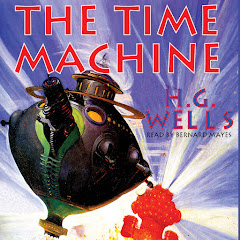
The Time Machine
About this audiobook
The Time Traveler first steps out of his magnificent time-transport machine in the year 802,700—more than 800,000 years beyond his own era. The brave explorer finds himself on a slowly dying Earth populated by a race of slender pacifists called the Eloi and decides to study this lush land of flower people before returning to his own age. These pacifists, he discovers, have built their wealth on the backs of a slave class forced to live below ground—the Morlocks. As the conflict between the classes surfaces, the Time Traveler finds that his only means of escape, his time machine, has been stolen.
Wells’ amazing view of the future, propelled forward from his own Victorian era to the present, serves both as classic science fiction and as a parable of the chasm between the working-class suffering and the upper-class privilege of his day. Wells’ remarkable storytelling and provocative insight make this terrifying portrait of the men of tomorrow an enthralling tale sure to capture readers everywhere.
Discover more
About the author
Herbert George Wells (1866–1946) was born in Bromley, England, to a working class family. His first novel, The Time Machine, was an instant success and Wells produced a series of science fiction novels which pioneered ideas about the future. His later work focused on satire and social criticism. Wells forecasted the rise of major cities and suburbs, economic globalization, and aspects of future military conflicts.
Bernard Mayes is a teacher, administrator, corporate executive, broadcaster, actor, dramatist, and former international commentator on US culture. He is best known for his readings of historical classics.


