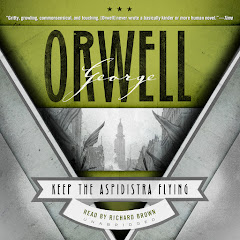
Keep the Aspidistra Flying
About this audiobook
Gordon Comstock is a poor young man who works by day in a grubby London bookstore and spends his evenings shivering in a rented room, trying to write. Gordon has published a slim volume of verse and is determined to keep free of the “money world” of safe, lucrative jobs, marriage, and family responsibilities. This world, to Gordon, spells the end of art and aspidistra, the homely, indestructible house plant that stands in every middle-class British window.
Gordon’s sweetheart, Rosemary, understands him: she is patient with his pride and lack of funds. But then, as it happens with all lovers, events overtake them.
Orwell’s picture of the “money world,” as Gordon sees it, is in his best satirical vein.
Discover more
Ratings and reviews

- Flag inappropriate
About the author
George Orwell (1903–1950), the pen name of Eric Arthur Blaire, was an English novelist, poet, essayist, journalist, and literary critic. He is best known for his works of social criticism and opposition to totalitarianism. He also wrote nonfiction about his experiences in the working class and as a solder. His work remains influential in popular culture and in political culture, and the adjective “Orwellian,"describing totalitarian and authoritarian social practices, has become part of the English language. In 2008, the London Times named him the second-greatest British writer since 1945.
Richard Brown (1937–2005) (a.k.a. Joseph Porter), was a former ballet dancer, actor, and popular audiobook narrator. Born in England, Richard came to the United States early in his career and performed with numerous regional ballet companies. After retiring from the ballet, he pursued a career in acting and recorded dozens of audiobooks for numerous publishers.


