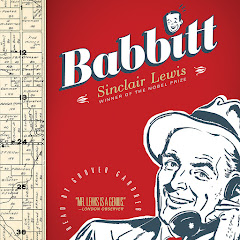
Babbitt
About this audiobook
In this sardonic portrait of the up-and-coming middle class during the prosperous 1920s, On the surface, everything is all right with Babbitt’s world of the solid, successful businessman. But in reality, George F. Babbitt is a lonely, middle-aged man. He doesn’t understand his family, has an unsuccessful attempt at an affair, and is almost financially ruined when he dares to voice sympathy for some striking workers. Babbitt finds that his only safety lies deep in the fold of those who play it safe. He is a man who has added a new word to our language: a “Babbitt,” meaning someone who conforms unthinkingly, a sheep.
Discover more
Ratings and reviews
About the author
Harry Sinclair Lewis (1885–1951), the son of a country doctor, was born in Sauk Centre, Minnesota. He attended Yale University, where he was editor of the literary magazine, and graduated in 1907. After a few of his stories had appeared in magazines and his first novel, Our Mr. Wrenn (1914), had been published, he was able to write full time. He was awarded the 1926 Pulitzer Prize for Arrowsmith (1925) but refused to accept the honor. However, he accepted the Nobel Prize awarded him in 1930. He was the first American to win the Nobel Prize for Literature.
Grover Gardner is an award-winning narrator with over a thousand titles to his credit. Named one of the “Best Voices of the Century” and a Golden Voice by AudioFile magazine, he has won three prestigious Audie Awards, was chosen Narrator of the Year for 2005 by Publishers Weekly, and has earned more than thirty Earphones Awards.


