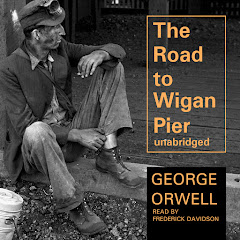
The Road to Wigan Pier
About this audiobook
When Orwell went to the north of England in the thirties to find out how industrial workers lived, he not only observed but shared in their experience. He stayed in cramped, dreary lodgings and subsisted on the scant, cheerless diet of the poor. He went down into the coal mines and walked crouching, as the miners did, through a one- to three-mile passage too low to stand up in. He watched the back-breaking, dangerous labor of men whose net pay then averaged $575 a year. And he knew the unemployed, those who had been out of work for so long they had sunk beyond despair into an inhuman apathy.
In his searing yet beautiful account of life on the bottom rung, Orwell asks himself why socialism—which alone, he felt, could conserve human values from the ravages of industrialism—had so little appeal. His answer was a harsh critique of the socialism and socialists of his time.
Discover more
Ratings and reviews

- Flag inappropriate
About the author
George Orwell (1903–1950), the pen name of Eric Arthur Blaire, was an English novelist, poet, essayist, journalist, and literary critic. He is best known for his works of social criticism and opposition to totalitarianism. He also wrote nonfiction about his experiences in the working class and as a solder. His work remains influential in popular culture and in political culture, and the adjective “Orwellian,"describing totalitarian and authoritarian social practices, has become part of the English language. In 2008, the London Times named him the second-greatest British writer since 1945.
Frederick Davidson (1932–2005), also known as David Case, was one of the most prolific readers in the audiobook industry, recording more than eight hundred audiobooks in his lifetime, including over two hundred for Blackstone Audio. Born in London, he trained at the Royal Academy of Dramatic Art and performed for many years in radio plays for the British Broadcasting Company before coming to America in 1976. He received AudioFile’s Golden Voice Award and numerous Earphones Awards and was nominated for a Grammy for his readings.


